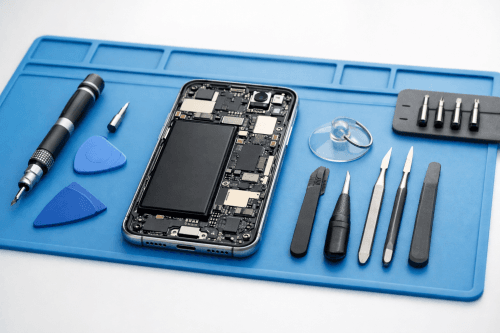
Right to Repair Consumer Tech Is Changing Hardware Decisions
Buying a phone or laptop now involves more than specs and price. Right to repair consumer tech has become a key factor as buyers look for devices that last longer, stay useful, and cost less to maintain over time. Instead of treating repair as an afterthought, consumers now factor it into the decision from the start.
At the same time, people feel squeezed by rising device prices and shorter upgrade cycles. For example, a cracked screen, dead battery, or worn charging port can turn a $1,200 device into e-waste. As a result, buyers increasingly ask a simple question before checkout: can I fix this later?
Repair costs have climbed faster than wages. In addition, supply chain disruptions raised part prices while subscription services increased the true cost of ownership. Faced with these pressures, consumers began demanding more control. They want access to parts, manuals, and fair repair options instead of being forced into early replacement.
This shift affects students, families, small businesses, and professionals who rely on dependable devices. However, it also introduces trade-offs. Repairable products may weigh more, appear thicker, or cost slightly more upfront. Ultimately, buyers decide whether long-term value outweighs short-term design polish.
⸻
Repairability as a Value Metric
People once compared cameras, screens, and processors. Now, they also compare repairability scores, battery replacement difficulty, and parts pricing. In other words, right to repair consumer tech has turned repair access into a measurable value metric.
Sites like iFixit publish teardown scores that rank devices by repair ease. Much like battery life tests, consumers read these scores as signals of lifetime cost. When repair scores are low, buyers expect higher expenses and shorter usable life.
In practice, repairability affects three key areas. First, service life improves because replaceable batteries and modular parts extend usability. Second, total cost drops when parts remain affordable. Third, resale value rises since buyers pay more for devices they can maintain themselves.
This trend mirrors what happened in the automotive industry decades ago. Back then, easy maintenance built brand loyalty. By contrast, sealed systems created frustration. Consumer technology is now following the same pattern.
Beyond cost, repairability also shapes trust. Over time, brands that support repair demonstrate confidence in their products. That confidence signals respect for customers and often translates into repeat purchases.
⸻
What This Means for Premium Devices
Premium devices face the most pressure. After all, higher prices demand longer usefulness. Buyers no longer accept sealed designs that fail after only a few years.
A $1,500 laptop must survive battery swaps, keyboard repairs, and port replacements. When it cannot, consumers feel cheated. Because of this, right to repair consumer tech reframes premium pricing as a long-term commitment rather than a disposable purchase.
Luxury design still matters. That said, durability now carries equal weight. Brands must justify extreme thinness if it blocks repair access. Some buyers accept those trade-offs, but many do not.
This shift already appears in marketing language. For example, companies highlight longer software support, easier battery access, and official repair programs. These claims target informed buyers who research carefully before spending.
Repair support also changes upgrade behavior. When repairs remain affordable, users delay replacements. As a result, annual refresh cycles lose influence, forcing companies to compete on quality instead of novelty.
⸻
Why Brands Can No Longer Ignore Right to Repair Consumer Tech
Legislation accelerated the repair movement. However, consumer behavior now drives it faster. Buyers actively reward companies that embrace repair and penalize those that resist it.
Brands that fight repair access face reputational risk. In particular, online communities amplify teardown results and repair horror stories. These narratives spread quickly and influence purchasing decisions at scale.
From a business standpoint, repair support creates new revenue streams. For instance, manufacturers can sell official parts, tools, and service subscriptions. At the same time, easier repairs reduce warranty claims and device returns.
Some companies fear losing control to third-party repair shops. In reality, transparent repair ecosystems expand the overall market. More devices stay in use longer, and brand ecosystems grow alongside them.
This moment resembles early app store debates. Ultimately, openness won because users demanded it. Repair now follows the same arc.
⸻
How Right to Repair Works in Practice
Right to repair consumer tech centers on access. Specifically, it means access to parts, tools, and documentation.
Manufacturers support repair by using standard fasteners instead of proprietary screws. In addition, they publish service manuals and sell batteries and screens at reasonable prices. Software locks that block repairs also disappear.
These changes lead to measurable outcomes. For example, repair times shorten, costs fall, and device uptime improves. A ten-minute battery swap beats a two-week service appointment every time.
Software plays a role as well. After repairs, calibration tools must work properly. Firmware must accept replacement components without disabling features.
When companies support these steps, repair becomes routine instead of risky.
⸻
Limitations and Real Concerns
Right to repair consumer tech does not solve every problem. Some repairs still require skill, and water resistance may suffer when designs open up. Additionally, counterfeit parts can enter the market.
Security also remains a concern. Devices must protect user data during repairs. Therefore, brands need safeguards without locking out independent technicians.
Cost presents another challenge. In some cases, modular designs increase manufacturing expenses. Companies must balance those costs with competitive pricing.
Regulation adds complexity across regions. Because rules differ by country and state, global brands must navigate fragmented requirements.
Despite these concerns, consumer demand continues to grow. Notably, buyers accept reasonable trade-offs when transparency exists.
⸻
Market and Cultural Impact
Right to repair consumer tech aligns closely with sustainability goals. By extending device life, repair reduces e-waste more effectively than recycling alone.
Culturally, repair restores a sense of ownership. As a result, buyers feel empowered rather than dependent. That mindset shift reshapes brand relationships.
Secondary markets benefit as well. When repairs remain accessible, refurbished devices gain value. This trend improves technology access for lower-income buyers.
Retailers now highlight repairability in product listings. Meanwhile, reviewers include repair scores alongside benchmarks. Repair has moved from niche forums into mainstream commerce.
⸻
Practical Takeaways for Buyers
Use repairability as a filter rather than an afterthought. Before purchasing, check teardown scores and compare part prices. Look for published service manuals.
Also consider software support. Without updates, hardware repair loses value. Choose brands that commit to both.
Budget for ownership, not just purchase price. In this way, right to repair consumer tech helps predict long-term costs more accurately.
Finally, reward companies that respect repair. Over time, buying choices shape the market faster than policy alone.
⸻
Summary
Right to repair consumer tech now signals value, trust, and longevity. Buyers increasingly demand control over the devices they own. Brands that embrace repair earn loyalty, while those that resist risk irrelevance. In 2026 and beyond, repairability no longer sits on the sidelines. It drives the decision.