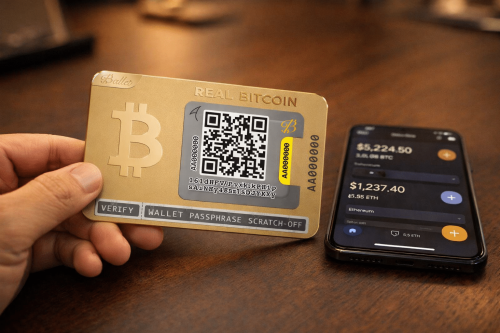
Ballet Wallet Cold Storage Card: Crypto Security Without the Complexity
Why Crypto Security Still Fails
Most cryptocurrency losses do not happen because the blockchain breaks.
They happen because people mismanage wallets.
Seed phrases get lost. Hardware wallets get compromised through firmware exploits. Some users simply abandon self-custody because the process feels overwhelming.
The Ballet Wallet cold storage card tackles this problem with a radically simple idea. Remove the electronics.
No firmware.
No batteries.
No USB connections.
Instead, the wallet exists as a physical stainless steel card designed to store cryptocurrency entirely offline.
For long-term investors who want security without technical friction, the Ballet Wallet cold storage card offers one of the most approachable cold-storage options available today.
But simplicity always comes with trade-offs. Understanding those trade-offs is what determines whether this wallet fits your crypto strategy.


Last update on 2026-09-24 / Affiliate links / Images from Amazon Product Advertising API
A Different Philosophy of Crypto Storage
Most hardware wallets behave like miniature computers.
Devices like the Ledger Nano X and Trezor Model T include screens, chips, firmware updates, and encrypted operating systems. These wallets work extremely well for active users who move crypto frequently.
However, that convenience introduces complexity.
Every electronic component becomes a potential attack surface.
Firmware vulnerabilities, connectivity exploits, and software bugs have all affected hardware wallets at different points in the industry.
The Ballet Wallet cold storage card approaches security from the opposite direction.
Instead of adding more technology, Ballet removes it.
The wallet works as a non-electronic cold storage device. Funds remain locked behind a private key that never touches an internet-connected device.
You do not install software.
You do not configure a seed phrase.
You do not update firmware.
You simply send cryptocurrency to the wallet’s address and store the card safely.
That simplicity makes the product particularly attractive to three audiences:
• Long-term crypto holders
• Investors creating backup wallets
• People gifting cryptocurrency
In other words, Ballet treats crypto storage less like software and more like a physical asset certificate.
Design That Feels More Like a Vault
The first impression of the Ballet Wallet cold storage card is surprisingly tactile.
It feels less like a gadget and more like a premium metal card.
The wallet uses 304 stainless steel, a material chosen for durability and corrosion resistance. The card measures roughly the size of a credit card but feels noticeably heavier and more rigid.
Those materials serve an important purpose.
Traditional paper wallets degrade over time. Ink fades. Paper tears. Moisture can destroy the printed private key.
Steel avoids those problems.
The key information is laser engraved directly into the metal surface, which means the data will not fade or rub away.
Some versions of the wallet even feature 24-karat gold plating, giving the card a collectible aesthetic while adding additional corrosion resistance.
Ballet also includes a protective acrylic case. This keeps the card safe from scratches during long-term storage.
In practice, the wallet feels designed for a safe, vault, or safety deposit box rather than a pocket.
The Security Architecture Behind the Card
The most interesting part of the Ballet Wallet cold storage card lies in how it generates and protects private keys.
Instead of printing the full private key on the card, Ballet splits the key into two independent components.
Those components include:
• Encrypted private key entropy
• Passphrase entropy
One component appears under a tamper-evident QR code sticker. The other sits beneath a scratch-off strip.
When you want to access your funds, you reveal both components and combine them inside the Ballet mobile app.
Only then does the full private key become usable.
This design prevents a major security risk in manufacturing.
If a single factory generated the entire private key, an insider could theoretically copy it.
Ballet solves that problem by generating the two components in separate geographic locations.
No single location ever sees the complete key.
The wallet also uses BIP38 encryption, a widely respected standard for encrypting Bitcoin private keys.
Even if someone gained access to one part of the key, they could not unlock the wallet without the passphrase component.
From a security architecture perspective, this layered approach creates a strong defense against both digital and supply-chain attacks.
What Using the Wallet Actually Feels Like
Where the Ballet Wallet cold storage card really shines is the user experience.
Crypto security often overwhelms beginners. Hardware wallets require seed phrase backups, firmware updates, and sometimes complicated setup steps.
Ballet eliminates nearly all of that friction.
To begin using the wallet, you simply scan the card’s QR code using the Ballet mobile app.
The app tracks the wallet’s public address and displays the balance.
From there, sending crypto works exactly like sending funds to any wallet.
Once the funds arrive, they remain locked in cold storage because the private key has never been exposed.
You can monitor balances anytime through the mobile app without compromising security.
When you eventually want to spend the funds, the process changes.
You remove the tamper-evident sticker, scratch off the passphrase strip, and scan both components into the app.
The app reconstructs the private key and allows a transaction.
Here is the important trade-off.
Once the private key becomes visible, the wallet no longer functions as sealed cold storage.
That means the Ballet Wallet cold storage card works best as a long-term vault rather than an everyday transaction tool.
The Companion App and Asset Support
While the wallet itself stays offline, the Ballet mobile app acts as the management interface.
The app allows users to:
• Track balances
• Activate additional supported tokens
• Buy cryptocurrency
• Swap assets
• Store NFTs
The wallet supports major cryptocurrencies including:
Bitcoin
Ethereum
Litecoin
XRP
ERC-20 tokens
BEP-20 tokens
This wide compatibility allows users to manage diversified crypto portfolios while still maintaining cold storage security.
Importantly, the app only accesses the private key if you choose to reveal it.
That design keeps the wallet aligned with its offline security model.
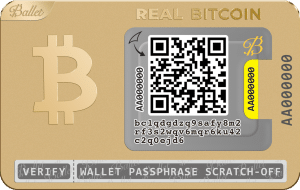
Ballet Wallet cold storage card
Where Ballet Fits in the Hardware Wallet Market
Comparing the Ballet Wallet cold storage card to traditional hardware wallets requires understanding its purpose.
Devices like the Ledger Nano X or Trezor Model T serve active crypto users who sign transactions regularly.
They include secure chips, firmware protections, and on-device transaction verification.
Those features make them powerful but also complex.
Ballet strips the concept down to its fundamentals.
No electronics means:
• No firmware exploits
• No connectivity attacks
• No battery degradation
• No software failures
That simplicity makes Ballet particularly appealing for long-term cold storage.
However, active traders will likely prefer wallets that allow secure transaction signing without exposing the private key.
The Strengths and Limitations
The Ballet Wallet cold storage card excels in a few clear areas.
Long-term crypto storage stands at the top of that list. Investors who plan to hold Bitcoin for years can store funds securely without worrying about firmware updates or hardware failure.
The card format also makes the wallet useful as a backup vault. Many experienced crypto users maintain multiple wallets, and Ballet provides a durable offline option.
Another surprising strength is gifting.
Because the wallet resembles a premium metal card, it works well as a physical gift containing cryptocurrency.
However, the design has limitations.
The wallet is not built for frequent transactions. Once the private key becomes visible, the cold storage advantage disappears.
Physical loss also becomes a real risk. Like cash or gold, whoever controls the card and its key components ultimately controls the funds.
That means safe storage practices are essential.
Final Verdict
The Ballet Wallet cold storage card solves one of the biggest barriers in cryptocurrency security: complexity.
By removing electronics entirely, Ballet turns crypto storage into something tangible and easy to understand.
The design favors durability, simplicity, and long-term security over advanced functionality.
That trade-off makes the wallet ideal for investors who want a straightforward way to store cryptocurrency offline.
Active traders may still prefer traditional hardware wallets.
But for long-term holders seeking a simple and durable cold storage solution, the Ballet wallet offers one of the most elegant approaches in the market today.