Bose Ultra Open Earbuds Review
Open-ear audio has become one of the biggest wearable tech trends because people want music without disconnecting from real life. This Bose Ultra Open Earbuds review looks at a product that solves a growing problem. Traditional earbuds isolate users too aggressively during workouts, walks, office work, and daily routines. Many people want awareness as much as immersion.
Bose positions the Ultra Open Earbuds as premium lifestyle audio gear rather than traditional workout earbuds. These target users who hate silicone ear tips, dislike pressure inside the ear canal, or simply want to stay connected to their surroundings. That includes parents, commuters, cyclists, office workers, and anyone who values awareness over total isolation. Bose also prices them at the high end of the category, so expectations are naturally high.

Last update on 2026-09-15 / Affiliate links / Images from Amazon Product Advertising API
Why Open-Ear Audio Suddenly Matters
For years, the wireless earbud market focused on stronger noise cancellation and deeper isolation. That worked well for flights and noisy offices. It also created a new problem. Many users started feeling disconnected from the world around them.
Open-ear audio flips that idea completely.
Instead of sealing the ear canal, open-ear earbuds let outside sound remain fully audible. You still hear traffic, conversations, coworkers, and family members while listening to music or podcasts. That matters because situational awareness improves both comfort and safety.
This shift explains why brands like Bose, Sony, Shokz, and Soundcore now compete aggressively in the category. People increasingly use earbuds all day instead of only during workouts. Long-term comfort and environmental awareness suddenly matter more.
Here is where the Bose Ultra Open Earbuds stand out. Bose designed these less like fitness gear and more like wearable lifestyle technology.
Bose Designed These for People Who Hate Earbuds
The biggest surprise in this Bose Ultra Open Earbuds review comes from the design itself. These barely resemble traditional earbuds.
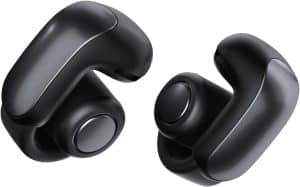
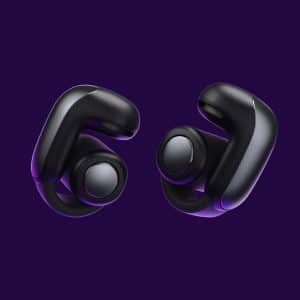
Instead of inserting into the ear canal, each bud wraps around the outer ear using a flexible cuff-style structure. Bose calls this an “open-ear clip-on” design. One side rests behind the ear while the speaker portion floats near the ear canal.
In practice, the experience feels radically different from standard earbuds.
There is no ear pressure. No silicone tip fatigue. No plugged-ear sensation.
That matters because many users stop wearing earbuds after an hour or two due to discomfort. Bose clearly targeted people who normally avoid earbuds altogether. The “earbuds for dads who hate earbuds” hook actually fits surprisingly well here.
The lightweight build also helps during long wear sessions. Users can keep these on while working in the yard, walking the dog, handling office calls, or moving around the house. The earbuds almost disappear after extended use.
Bose also made smart material choices. The flexible joint feels durable without creating excessive clamp pressure. The matte finish looks understated and premium rather than flashy. At the same time, the design feels fashion-forward enough to stand apart from standard plastic earbuds.
The trade-off is visibility.
These are not invisible earbuds. The curved cuff design stands out more than AirPods or low-profile fitness buds. Some users will love the futuristic look. Others may prefer more discreet hardware.
Still, Bose deserves credit for creating something genuinely different in a crowded category.
 Real-World Sound Performance and Spatial Audio
 Real-World Sound Performance and Spatial Audio
Audio quality creates the biggest challenge for open-ear products. Since nothing seals the ear canal, bass response and immersion become harder to achieve.
This Bose Ultra Open Earbuds review confirms Bose handled that challenge better than most competitors.
The sound signature feels clean, spacious, and surprisingly full considering the design limitations. Vocals come through clearly during podcasts and calls. Acoustic tracks sound detailed and airy. Bose also tunes the upper mids carefully, which helps voices remain crisp without sounding harsh.
Bass performance naturally cannot match sealed earbuds with active noise cancellation. Physics still matters. Open-ear products lose low-end impact because sound escapes outward instead of staying trapped inside the ear canal.
That said, Bose pushes more bass than many competing open-ear models.
Music still feels energetic during workouts and walks. Pop, hip-hop, and electronic tracks maintain enough punch to feel engaging. Most users will find the tuning more satisfying than bone-conduction alternatives.
Where this gets interesting is Bose Immersive Audio.
Bose includes spatial audio processing that attempts to create a wider and more dimensional listening experience. Unlike gimmicky implementations, this actually improves openness and separation in many tracks.
Movies and live recordings especially benefit from the effect. The audio feels less centered directly beside your ears and more naturally spread around you.
The feature works best at moderate volume levels. At higher volumes, open-ear limitations become more noticeable since environmental noise competes more aggressively with the music.
This is also not ideal for loud gyms or airplanes.
These earbuds excel in environments where awareness matters:
- Walking paths
- Office settings
- Neighborhood cycling
- Yard work
- Household multitasking
- Hybrid work setups
For total immersion, traditional Bose QuietComfort Ultra Earbuds still outperform these easily.
But that misses the point entirely.
 Comfort During Workouts, Walking, and Office Use
 Comfort During Workouts, Walking, and Office Use
Comfort may be the strongest reason to buy these.
Many earbuds feel acceptable during short sessions but become irritating over time. The Bose Ultra Open Earbuds avoid most of those issues because they never seal the ear canal.
That creates several real-world advantages.
During walking sessions, users remain aware of traffic, cyclists, and surrounding conversations. That makes outdoor exercise feel safer and less isolating.
For parents, the earbuds allow music playback while still hearing children or household activity. Bose clearly understands this lifestyle use case.
Office wear also becomes more practical.
Traditional earbuds often create social friction in shared workspaces because coworkers assume the user cannot hear them. Open-ear audio changes that dynamic completely. Users stay approachable while still listening to podcasts, music, or meetings.
The lightweight structure also reduces ear fatigue during long conference calls.
Cyclists benefit too, though local safety laws vary by region. Because the ear canal remains open, riders maintain better environmental awareness compared to noise-canceling earbuds.
The secure fit helps during movement as well. Despite the unusual shape, the earbuds remain stable during light exercise and daily activity.
That said, these are not extreme sports earbuds.
Heavy runners may notice slight movement during aggressive workouts. Users with very small ears may also need time to adjust the fit positioning.
Still, Bose nails the comfort-first approach better than most rivals.
Battery Life, Charging, and Everyday Practicality
Battery life lands in a respectable range for premium open-ear earbuds.
Users can expect roughly seven hours of listening on a charge under normal conditions, with the charging case extending total runtime significantly further. Immersive Audio reduces endurance somewhat, which feels expected given the additional processing requirements.
For most users, this easily covers:
- A full workday with breaks
- Several walks or workouts
- Long yard work sessions
- Cross-town commuting
- Travel days
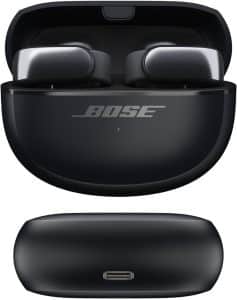
USB-C charging keeps things modern and convenient.
The charging case deserves mention too. Bose keeps the case relatively compact despite the unusual earbud shape. That matters because many open-ear products become awkwardly bulky due to their larger frame designs.
Call quality performs well in realistic environments.
Voice pickup stays clear during office calls and outdoor walks. Wind suppression also works better than expected. Bose clearly optimized these for everyday communication rather than only media playback.
Bluetooth connectivity remains stable across phones, tablets, and laptops. Multi-device users will appreciate the seamless switching behavior during hybrid work routines.
How the Bose Ultra Open Earbuds Compare to Rivals
This Bose Ultra Open Earbuds review would feel incomplete without comparing the competition.
Soundcore AeroFit
The Soundcore AeroFit serves as the budget-friendly alternative.
It costs dramatically less while delivering a similar open-ear concept. Users who mainly want awareness during walks or workouts may find the AeroFit offers excellent value.
However, Bose clearly wins in:
- Audio refinement
- Premium materials
- Comfort tuning
- Spatial audio quality
- Long-session wearability
The Soundcore model makes more sense for casual users or budget-conscious buyers.
The Bose Ultra Open Earbuds target users willing to pay more for a polished premium experience.
Sony LinkBuds Fit
Sony approaches the category differently.
The Sony LinkBuds Fit still sit more traditionally in the ear while preserving environmental awareness features. Sony also delivers stronger app customization and excellent adaptive audio controls.
However, Bose offers a more natural open-ear sensation.
Users who dislike anything inside the ear canal will likely prefer Bose immediately. Sony appeals more to buyers who still want partial isolation and stronger bass response.
In practice:
- Bose prioritizes comfort and awareness
- Sony balances awareness with immersion
Shokz OpenFit
Shokz remains a major player in open-ear fitness audio.
The OpenFit focuses heavily on exercise users and lightweight wearability. Shokz also benefits from strong brand credibility in sports-focused awareness audio.
Bose counters with:
- Richer sound
- More premium aesthetics
- Better lifestyle versatility
- Stronger media playback performance
Fitness-first users may still lean toward Shokz. Lifestyle users will probably prefer Bose.
Things to Consider Before You Buy
The Bose Ultra Open Earbuds solve a very specific problem. Buyers should understand that clearly before spending nearly $300.
These do not replace noise-canceling earbuds.
Users wanting airplane isolation, subway immersion, or loud-gym focus should look elsewhere. Bose already sells better options for those situations.
Sound leakage also exists at higher volumes. Nearby people may hear some audio in quiet environments.
Bass lovers may want more low-end impact too. Bose performs impressively for open-ear hardware, but sealed earbuds still produce deeper bass physically.
Price creates another consideration.
At roughly $299, these sit firmly in premium territory. Buyers pay extra for comfort engineering, Bose tuning, and the unique design approach.
That said, users who struggle with traditional earbuds may find the comfort upgrade completely worth the investment.
Final Verdict
This Bose Ultra Open Earbuds review confirms Bose created one of the most polished open-ear audio products currently available.
The company avoids gimmicks and focuses on solving practical everyday frustrations. These earbuds feel designed for real life rather than isolated tech demos.
They work especially well for:
- Parents managing busy households
- Office workers needing awareness
- Walkers and cyclists
- Users who hate in-ear pressure
- People wanting all-day comfort
- Outdoor exercise enthusiasts
The combination of comfort, environmental awareness, stable fit, and surprisingly strong sound quality makes these stand out in a fast-growing category.
Most importantly, Bose understands the emotional appeal behind open-ear audio. People increasingly want technology that integrates into life instead of separating them from it.
The Bose Ultra Open Earbuds accomplish exactly that.
Affiliate Disclosure
GadgetGram may earn a small commission if you purchase through links on this page. This helps support our independent testing and editorial work. We only recommend products we’ve researched or tested ourselves, and our opinions remain unbiased regardless of affiliate relationships.