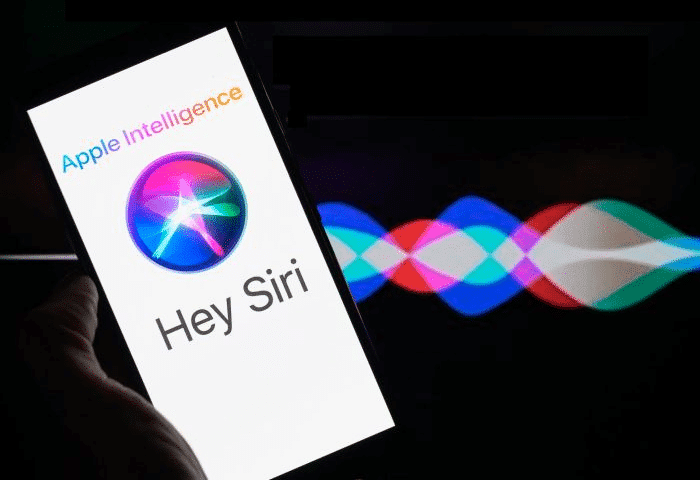
Apple is considering to use AI models from OpenAI or Anthropic to power its improved version of Siri unveiled at WWDC 2024, rather than using technology built in-house, according to a report from Bloomberg’s Mark Gurman. This is part of Apple’s new plan to turn around its flailing AI effort.
The company had promised to deliver an overhauled version of its voice assistant that understands personal context and takes action for the user across apps since last year, but the launch of its AI-enhanced Siri was officially delayed in March 2025.
 While it’s no secret that Apple has been falling behind Google, OpenAI, and Anthropic in the AI race for the last few years, this unexpected delay only widens that gap even further.
Despite continuing to develop a project named “LLM Siri” that uses its own in-house AI models, Apple has now reportedly asked OpenAI and Anthropic to create versions of their large language models that can run on Apple’s Private Cloud Compute—the company’s private cloud infrastructure designed specifically for private AI processing, which servers run on Apple chips. Apple already relies on its servers for certain AI features that can’t be run locally.
Apple does use OpenAI’s ChatGPT for some parts of Apple Intelligence, but relying completely on a third-party company for Siri would be a major change. Bloomber’s recent report notes that “The company currently powers most of its AI features with homegrown technology that it calls Apple Foundation Models”, for which Apple had been planning a new version of its voice assistant that runs on said technology for 2026. One of the few AI announcements Apple made at WWDC 2025 was to make those same foundation models available to third-party developers.

Apple’s Senior VP of software engineering, Craig Federighi, unveiling Apple Intelligence at WWDC24
However, the possibility of using third-party AI models has lead to internal changes at Apple. Another article from Bloomberg reports that leadership of the company’s AI teams has changed hands from John Giannandrea, Apple’s senior vice president of machine learning and AI strategy, to Craig Federighi, the senior vice president of software engineering.
Bloomberg has also reported that Mike Rockwel—who recently oversaw the development of the Apple Vision Pro—has now been appointed as the leader of Apple’s Siri team after CEO Tim Cook “lost confidence” in John Giannandrea, the team’s former chief. Rockwell recently requested his team to test whether Anthropic’s Claude, OpenAI’s ChatGPT, or Google’s Gemini performs better at handling basic requests compared to Apple’s own in-house AI models, with Anthropic’s looking to be the most promising.
Leveraging Anthropic or OpenAI to power Siri would align with Samsung’s current approach to AI. While Samsung’s Galaxy AI relies on some custom Samsung software, it primarily uses Google’s Gemini. Nevertheless, using third-party models wouldn’t prevent Apple from switching back to using in-house models in the foreseeable future. In fact, it wouldn’t be the first time the company would make such a transition, as it went from a Maps app that relied on Google Maps to its custom Apple Maps service back in 2012, so such change is definitely possible.
Regardless of Apple’s final decision, its updated version of Siri isn’t expected to launch until 2026. The company is planning to launch a small batch of AI-adjacent features this fall with the launch of iOS 26, iPadOS 26 and macOS 26.