Audiobook subscriptions look simple until you start comparing what you actually get. Some services rent access. Others limit listening by hours. Audible Premium takes a different approach. For $14.95 per month, you receive one credit for an audiobook, access to the Plus Catalog, and member discounts. More importantly, books purchased with credits stay yours after cancellation.
That ownership model makes Audible unusually compelling for regular listeners. However, Spotify, Everand, and Libby now challenge its value from very different directions. This Audible Premium review examines where Audible still wins and when another service makes more sense.
Audible Premium Review: Why the Credit Still Matters
Audible recently renamed Premium Plus to Audible Premium, so you may see both names during the transition. The core $14.95 plan provides one monthly credit, unlimited listening from the Plus Catalog, and access to member sales and discounts.
The credit creates Audible’s strongest value proposition. You can redeem it for a title from Audible’s Premium selections, including new releases. That matters when the audiobook you want costs considerably more than $14.95 when purchased separately.
In practice, Audible works less like Netflix and more like a digital book club. Your monthly payment gives you one book that becomes part of your permanent library.
That distinction changes how you can listen. Start a 30-hour biography this month and finish it six weeks later. You do not need to race against an hourly allowance. You can also return to that book next year without restarting a subscription.
For listeners who revisit nonfiction, favorite novels, or reference material, that permanence carries real value.
Where Audible Beats Spotify
Spotify creates the most obvious challenge because millions of people already use it for music and podcasts.
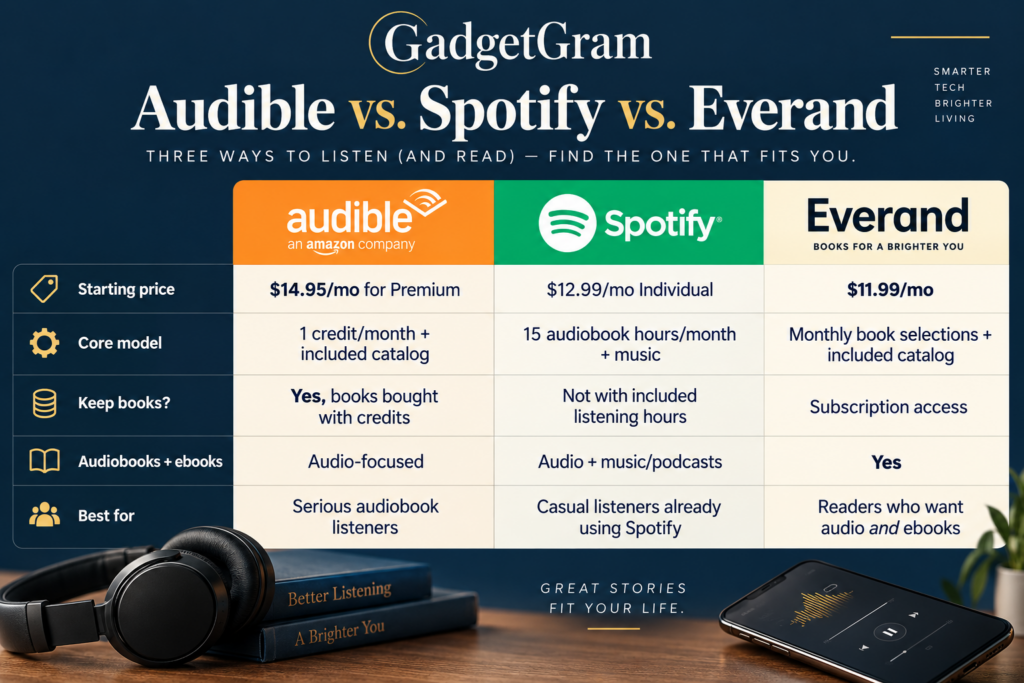
Premium Individual currently costs $12.99 per month in the US and includes 15 hours of audiobook listening each month for eligible subscribers. Spotify says its subscriber audiobook catalog contains more than 700,000 titles.
For occasional listeners, that is an excellent deal. If you already pay for Spotify and listen to one short audiobook every month or two, adding another subscription makes little sense.
The problem appears with longer books.
A 25-hour novel cannot fit inside a 15-hour monthly allowance. Unused Spotify audiobook hours also expire instead of rolling over. Replay a section and Spotify counts that listening time again based on the section’s normal-speed duration.
Spotify offers additional options, including Audiobooks+ and top-ups. However, once you regularly need extra listening time, Audible Premium starts making more economic sense.
Audible also builds its entire experience around audiobooks. Discovery, credits, purchases, Originals, and included listening all support spoken-word content. Spotify places audiobooks inside a much broader entertainment platform.
That focus matters more than it sounds. Frequent audiobook listeners benefit from a service designed around how they find, purchase, and maintain books.
GadgetGram verdict: Spotify subscribers should use their included audiobook hours first. Pay for Audible when those limits start getting in the way.
Everand Offers a Different Kind of Value
Everand takes another route. Its plans currently start at $11.99 per month and combine ebooks with audiobooks. Higher tiers increase the number of premium book selections available each month while keeping access to a separate included catalog.
That makes Everand attractive for readers who regularly switch formats.
You might read an ebook during a quiet evening, then choose an audiobook during tomorrow’s commute. A service that supports both habits can provide more practical value than an audiobook-only subscription.
Audible remains the stronger choice for someone focused primarily on audiobooks and permanent credit purchases. Everand makes more sense when reading and listening share equal importance.
The Free Alternative Audible Cannot Ignore
Libby creates the toughest value argument because its subscription price is zero.
Participating public libraries let valid library card holders borrow ebooks and audiobooks through Libby without subscription fees, in-app purchases, or late fees.
The trade-off comes through availability. Popular releases can have waiting lists, while Audible lets a Premium subscriber spend a credit on an eligible title immediately.
That creates two very different experiences. Libby rewards patience and price-conscious reading. Audible prioritizes access, convenience, and ownership.
Smart listeners do not necessarily need to choose one. Use Libby for books you can wait for, then save Audible credits for expensive releases or titles you want permanently.
What Audible Premium Could Do Better
Subscription complexity remains Audible’s clearest weakness.
Audible currently offers Standard at $8.99 per month, Premium at $14.95 with one credit, and Premium at $22.95 with two credits, alongside annual choices. Legacy Audible Plus subscribers may also retain the older $7.95 plan. Audible stopped offering Plus to new subscribers in March 2026.
That lineup asks buyers to do more homework than necessary.
The $14.95 price also does not guarantee good value. If you rarely finish audiobooks, credits can accumulate while another monthly charge quietly stays on your card.
Audible’s Plus Catalog creates another layer to understand. Some books come with the subscription, while others require credits. That system offers flexibility, but it feels less straightforward than a true unlimited streaming library.
Spotify also changed consumer expectations. People increasingly expect audiobooks to arrive inside subscriptions they already pay for. Audible must therefore justify another $14.95 in an increasingly crowded monthly subscription budget.
Audible Premium Review Verdict: Who Should Subscribe?
Audible Premium makes the most sense for someone who listens to roughly one substantial audiobook each month. It also suits listeners who prefer major releases, choose long books, revisit favorites, or want to build a permanent digital collection.
Spotify Premium users with lighter listening habits should start there. Those 15 included hours may cover everything you need without adding another bill.
Readers who move frequently between ebooks and audiobooks should give Everand serious consideration. Price-conscious listeners should start with Libby whenever their library offers the books they want.
Our recommended order is simple: start with Libby, use Spotify if you already pay for Premium, then subscribe to Audible when audiobooks become a genuine habit.
GadgetGram Verdict: 8.5/10
Audible is not the cheapest route into audiobooks. It remains one of the strongest services for people who already know they love them.
Its biggest advantage is not the app, Originals, or catalog size. The real advantage is what happens when you spend a credit.
You get a book you can keep.
Spotify feels like streaming. Everand feels like a broader reading membership. Libby feels like the smartest free option. Audible feels like building a digital bookshelf one carefully chosen title at a time.
For the right listener, that difference still makes Audible Premium worth $14.95 per month. Get Audible Now with a Free Trial offer.
Affiliate Disclosure
GadgetGram may earn a small commission if you purchase through links on this page. This helps support our independent testing and editorial work. We only recommend products we’ve researched or tested ourselves, and our opinions remain unbiased regardless of affiliate relationships.