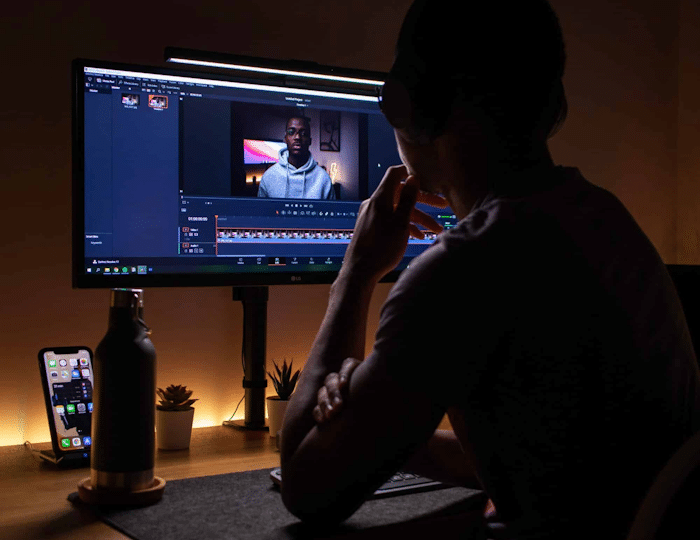
Video editing has always required a blend of technical skills, patience and genuine creative judgment. A social media video, even a short one, may involve trimming clips, stitching scenes together, adding captions, balancing audio, choosing transitions and preparing the final file for various platforms. AI is really transforming this entire workflow, automating a lot of the repetitive work while still allowing creators to remain authentically involved in the creative process.
In 2026, AI video editing is much more than just applying simple filters and automatic effects. Modern tools can assist in transcription, captioning, scene selection, audio enhancement, background removal, reframing and other post-production tasks. Some systems are even able to respond to simple natural language commands, making video editing much more accessible for people with little experience with conventional editing software.
What Is an AI Video Editor, Exactly?
An AI video editor blends traditional editing tools with machine-learning tech. Rather than requiring users to manually make every adjustment, the software can evaluate video and audio and propose, or even make, certain changes itself.
For example, an editor might listen to a spoken dialog and automatically generate a transcript. The transcript can then be used to find specific parts of a recording, trim unnecessary parts, or create captions from it. Other AI capabilities include identifying subjects in a frame, removing the background, improving the clarity of speech, or converting a landscape video to portrait format.
But that doesn’t mean artificial intelligence is able to replace traditional editing entirely. It just cuts down on the amount of repetitive work in preparing footage.
How Natural-Language Editing Actually Works
One of the genuinely more interesting developments here’s the use of natural-language instructions. Rather than digging through menus hunting for individual functions, users can just describe the change they want in plain, ordinary language.
Someone might want to remove long pauses from an interview, add captions, select a particular section, or shorten a longer recording down. AI-assisted editors can interpret instructions like these and apply the right editing operations from there.
This approach genuinely helps beginners especially, since it cuts down the need to understand every technical control before even starting a project. At the same time, experienced editors can use natural-language tools to speed through routine tasks a lot faster than doing it manually.
The industry’s increasingly moving toward this type of workflow overall. Recent developments include AI systems that let editors search, cut, caption, mix audio, and format video through plain-language commands instead of menu-diving.
Where Free AI Video Editing Can Genuinely Help
Free AI video editing tools genuinely help students, independent creators, small businesses, and anyone just experimenting with video production for the first time. A free workflow gives you a chance to learn how automated editing actually works without immediately committing to a subscription.
For someone researching a ChatGPT video editor free, the important thing to consider isn’t simply whether an editor uses AI at all. It’s how those AI features actually fit into the complete editing process as a whole.
A genuinely useful editor should make ordinary tasks easier while still giving you enough manual control for adjustments when needed. You might want to change an automatically generated caption, swap out a suggested transition, shorten a clip yourself, or tweak the timing of background music manually.
Free versions can come with real limitations too, though. Export quality, available templates, storage, processing credits, advanced AI functions, or watermark policies can all vary quite a bit between platforms. So checking the current terms and features matters before diving into a large project.
AI Editing Versus AI Video Generation
AI video editing and AI video generation are related but genuinely different technologies, worth telling apart.
AI editing generally starts with footage you already have. The system helps organize, shorten, enhance, caption, or modify that existing material. AI generation, on the other hand, can create entirely new visual material from written prompts or other inputs, no source footage needed.
Understanding this distinction helps you pick the right workflow for the job. Someone editing a recorded lecture probably benefits most from transcription and automatic cutting, while someone developing a fictional scene might genuinely need a generative video system instead.
A lot of modern platforms are starting to combine both approaches now. That lets creators generate new assets and then drop those assets straight into a conventional editing timeline. Current video software’s increasingly weaving generative video, audio, and other AI capabilities directly into established editing workflows.
Why Human Oversight Still Genuinely Matters
AI can process video fast, sure, but speed doesn’t necessarily equal quality. Automated systems can misunderstand speech, pick an unsuitable moment, remove a pause that was actually intentional, or produce captions that need real correction afterward.
Creative decisions also depend heavily on context. A dramatic pause might be genuinely important in a documentary, while a fast cut works better for a quick social video. AI can offer suggestions, sure, but the creator ultimately needs to decide whether those choices actually support what the video’s trying to do.
That’s exactly why reviewing an AI-generated edit before publishing stays a genuinely important step, not something to skip.
Choosing an AI Video Editing Workflow
The best workflow really depends on the type of content you’re actually producing. Someone making short social clips might prioritize automatic captions, resizing, quick trimming, and simple effects. Someone producing interviews or podcasts might care a lot more about transcription and dialogue editing specifically. Professional filmmakers, meanwhile, probably need detailed timeline controls, color correction, audio mixing, and precise frame-level adjustments that go well beyond automation.
Another thing to consider is cost. A free editor may be enough for the occasional project, but frequent creators will eventually need more storage, advanced exports, or more sophisticated AI features down the line.
Worth thinking through privacy and data handling too. When footage gets uploaded to an online AI service, it’s worth understanding how your content actually gets processed and what retention policies apply, especially when videos contain confidential conversations or private information you’d rather not have sitting on someone else’s server indefinitely.
Where AI-Assisted Video Editing Is Probably Headed
AI’s likely to get increasingly baked into ordinary editing software rather than existing as some separate bolted-on feature. The direction the industry’s already heading points toward editors that can understand footage, respond to instructions, automate repetitive operations, and genuinely work alongside human creators rather than replacing them.
So the most practical role for AI here really isn’t replacing the editor. It’s acting as an assistant that handles the time-consuming operations while humans focus on storytelling, structure, tone, and the creative decisions that actually matter.
As these technologies keep developing, video editing should become a lot more accessible to beginners, while experienced creators pick up additional ways to manage increasingly complex projects. The end result’s probably a workflow where technical tasks become less of a barrier, and creative judgment ends up mattering even more than it does now.