
Reliability for a courier team does not come from adding vans or pushing drivers harder. It comes from a consistent daily routine that holds up when pickups shift, traffic slows, and recipients are not home.
Start The Day with a Clean Intake Process
Most bad days start before 9 a.m. Jobs come in by phone and email while drivers crowd the counter waiting for assignments. If dispatch copies those jobs between paper sheets and chat threads, one will eventually get missed, and the error will chase the team for the rest of the day.
The team needs one place where today’s work lives. Every order should have a checked address and a set time window before it is assigned to a driver. No job should stay in someone’s head or sit in a text thread that no one else can see.
A shared dispatch board gives everyone that view at the same time. Dispatchers can see all jobs and time windows in one list, while drivers and administrators work from the same record without calling to ask what happened or which details changed. Paper cannot do that.
Sequence Routes Before Drivers Leave the Yard
Couriers lose time through small choices. They decide which buildings to visit first and where to park for nearby drops. Those minutes add up across a route and leave less room for a late pickup.
Route optimization sorts stops into a sensible order before the shift starts. It weighs addresses and time windows, then provides a plan drivers can follow without debating each turn. The goal is a practical day with fewer backtracks, less guesswork, and enough time to complete scheduled work.
Load planning matters here too. A van packed in drop order saves minutes at each curb, while a van packed at random costs minutes at each stop. Drivers should not need to dig through parcels or reshuffle the load while customers are waiting for a knock.
Short runs still need this step. A poor stop sequence can create unnecessary backtracking, while a practical sequence preserves more room for a rush job or an unexpected delay.
Leave Room for the Day to Change
A plan that uses every minute will break by noon. Traffic will slow one run, a recipient will not answer, and dispatch may receive a rush pickup that cannot wait until tomorrow.
Reliable teams leave slack on purpose. That might mean capping stops per driver or keeping one van lightly loaded for late work. When judging whether a plan is full, time windows are more useful than stop counts alone.
This is where many teams pull dispatch and tracking into one record with courier management software that keeps drivers and administrators on the same page throughout the day. A single source of truth prevents a small late change to one route from splitting the team into two conflicting versions of the schedule.
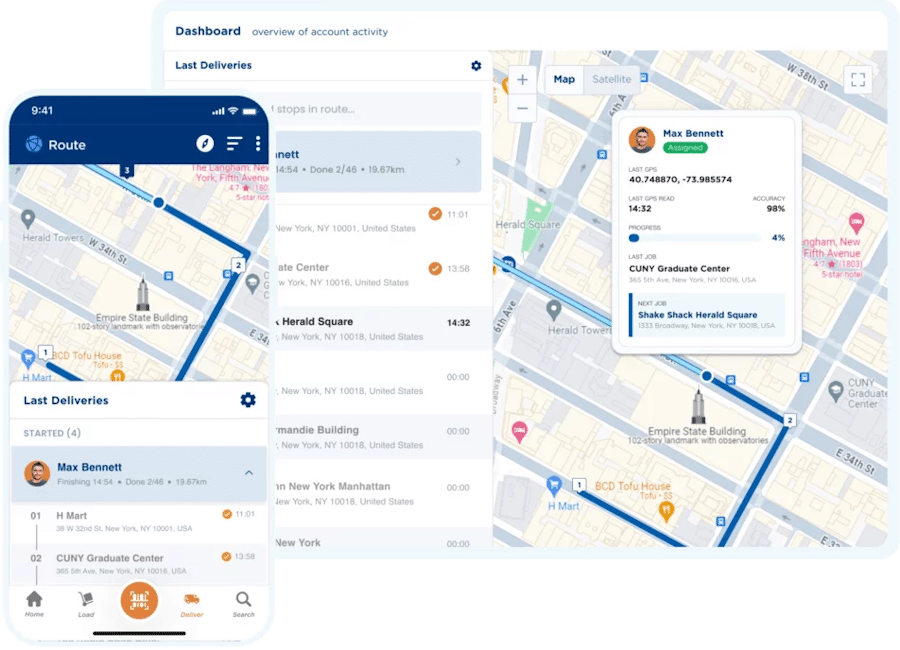
Fleet capacity is the limit to respect each morning. An overloaded driver starts late and falls further behind with each stop. A balanced dispatch board gives every driver a run that fits both the van and the available hours in the shift.
Handle Exceptions While Drivers Are Still Moving
Late jobs rarely surprise anyone in hindsight because the warning signs usually appeared early. A driver sat too long at one stop. A gate code did not work, delaying the stops that followed.
Real-time GPS tracking shows those signs while there is still time to act. A supervisor can see who is behind and move the next pickup to a nearby driver. Geofencing can mark a stop as arrived or cleared without requiring a phone call.
Driver communication should stay short and tied to the job. The driver needs a way to flag a wrong address or no answer in two taps, and dispatch needs that flag as soon as it happens. Long phone calls do not fix a late run. Quick, clear flags give dispatch time to respond.
Customers need the same honesty while they wait. Where the chosen system supports it, an automated ETA text can reduce the need to call dispatch and provide context when a delivery window slips.
Close The Loop with Proof and Review
The last ten minutes of a job determine whether it stays done. Clear proof of delivery can stop an argument before it starts, while missing proof creates back-office work that may continue for days.
Set one standard and follow it during every shift. Each drop gets a photo or a scan, and every handoff gets the name of the person who accepted it. Drivers do not decide individually what counts as proof because the routine sets that requirement for everyone.
That record should live with the job instead of remaining in a camera roll. When dispatch and administrators share the same back-office view, no one has to hunt for photos at 6 p.m. The proof is already connected to the correct address and delivery time.
Then audit the day while the details are still fresh. Check the on-time delivery rate by driver and by run. Review failed first attempts and identify why they happened. Two misses at the same block can point to bad address data that needs to be corrected.
Small fixes stack up quickly in last-mile work when the team writes them down. A corrected gate code saves tomorrow’s driver a second trip. Moving a time window by half an hour can turn a chronically late stop into an on-time delivery.
Reliable days are built through clean intake, well-sequenced routes, protected slack, and properly filed proof. Follow those four practices the same way each day, and the remaining chaos becomes manageable for the whole team.