iRobot Roomba j7+ Robot Vacuum That Avoids Real Messes
Dirty floors rarely come from dust alone. Shoes track in grit. Pets leave hair and surprises. Cords snake across rooms. Most robot vacuums fail because real homes feel unpredictable. That problem sets the stage for the iRobot Roomba j7+ robot vacuum. People want clean floors without babysitting a robot or rescuing it from tangled cables. They also want trust. A robot that spreads pet waste ruins that trust fast. The iRobot Roomba j7+ robot vacuum promises something different. It claims to see obstacles, avoid disasters, and empty itself without daily effort. That promise matters because this robot costs real money and connects to your home network. Convenience, reliability, and privacy all sit on the line. I tested the iRobot Roomba j7+ robot vacuum as a daily cleaner, not a showroom demo. The results tell a clear story about where it shines and where it still asks for patience.

The real problem it solves
Most robot vacuums clean well only in perfect rooms. Real rooms include toys, cords, socks, and pets. The iRobot Roomba j7+ robot vacuum focuses on that chaos. Its obstacle avoidance system aims to recognize objects before contact. That feature changes daily use more than raw suction numbers. I let it run during normal life. Shoes stayed on the floor. Pet bowls stayed out. Charging cables remained plugged in. The robot navigated without drama. It slowed near clutter and rerouted instead of forcing a path. That behavior saved time and stress. The self-emptying base also solved a quieter problem. People forget to empty dust bins. Full bins reduce performance and create smells. The Clean Base removed that chore for weeks at a time. For busy homes, that combination solves the core pain point: trust. You can leave the house and expect clean floors without a mess waiting when you return.
Unboxing & first touch
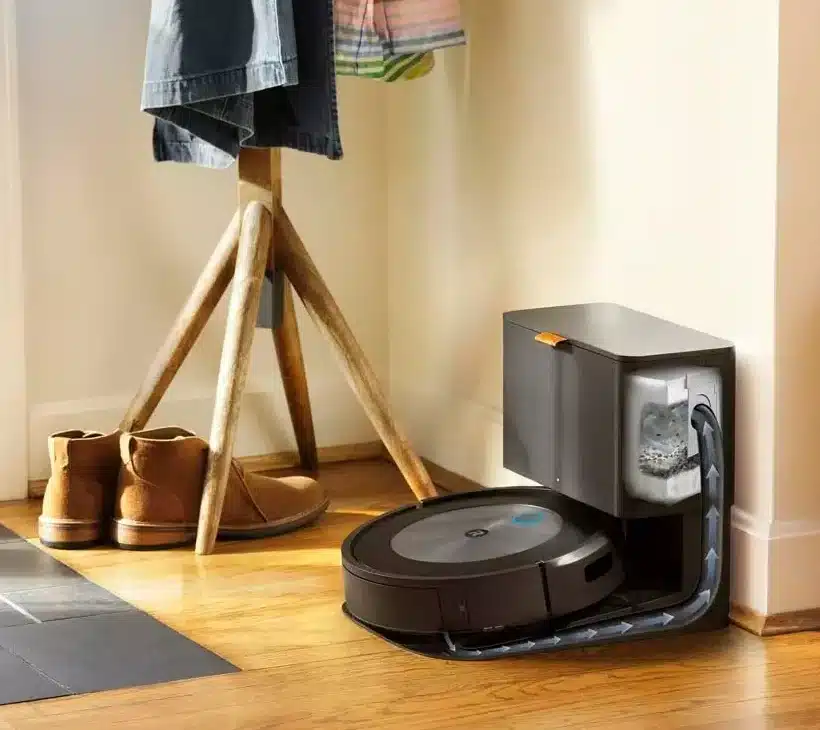
The box feels dense and well organized. iRobot packs everything with clear compartments and minimal plastic smell. Inside, you get the robot, the Clean Base, two dirt disposal bags, a power cord, and printed guides. The robot feels solid with a matte finish that resists fingerprints. The bumper flexes with confidence instead of feeling hollow. The Clean Base carries more weight and anchors itself well on hard floors. Setup starts fast. You plug in the base, place the robot, and scan a QR code. The first touch impression feels polished and deliberate. Nothing rattles. Nothing feels cheap. The only friction comes from the size of the Clean Base. It needs vertical clearance. Small apartments may need to plan placement carefully. Still, the unboxing experience signals a premium product built for daily use, not occasional novelty.
Design & interface
The iRobot Roomba j7+ robot vacuum keeps physical controls simple. A single top button handles start, pause, and resume. LED indicators stay subtle and readable. The front camera window sits flush and avoids the bug-eye look of older models. The robot stays low enough to slide under most couches and beds. The Clean Base uses a fabric-wrapped exterior that blends better than glossy plastic towers. Bag replacement feels clean and quick with a sealed slide mechanism. The overall design favors function over flash. That choice fits homes that want quiet integration. The robot feels easy to trust because every interaction feels predictable. Nothing hides behind confusing gestures or cryptic lights. You always know what the robot plans to do.
Connectivity & pairing
The iRobot Roomba j7+ robot vacuum uses Wi-Fi for control and updates. Pairing takes about five minutes through the iRobot Home app. The app walks you through permissions and room setup without pressure. Connection stayed stable across a medium-size home. I tested range through walls and across floors. Commands responded quickly with no noticeable lag. I saw no random disconnects during weeks of use. The robot also integrates with voice assistants for basic commands. Voice control feels reliable for starting or stopping cleanings. Advanced controls still work best in the app. Firmware updates installed quietly overnight. Connectivity reliability ranks as a strong point. You set it once and forget it.
Hardware deep dive
The cleaning system relies on dual rubber brushes instead of bristles. That choice reduces hair tangles and keeps performance consistent. The suction motor sounds firm but not shrill. Noise levels stay reasonable for daytime runs. On hard floors, it pulls fine dust and larger debris in one pass. On carpets, it boosts power automatically. The edge-sweeping brush reaches baseboards well. The internal dust bin stays small because the Clean Base handles storage. Each bag holds weeks of debris for an average home. Build quality feels durable. Hinges stay tight. Wheels grip transitions without slipping. Specs matter less here than execution. The hardware works together smoothly. Nothing feels overbuilt or underpowered.
Software, sensors & navigation
This section defines the iRobot Roomba j7+ robot vacuum. The front-facing camera and sensors build a live map as the robot moves. Mapping accuracy improved after the first full run. Room boundaries stayed consistent. The robot learned furniture positions and refined paths over time. Obstacle detection worked well with cords, shoes, and pet bowls. It slowed, scanned, and rerouted. I tested failure modes by leaving socks and charging cables in random spots. The robot avoided most obstacles cleanly. Rare misses happened with flat, dark objects under low light. When that happened, the robot stopped and sent an alert instead of pushing forward. Latency between detection and action stayed low. Navigation logic felt cautious but efficient. That balance prevents damage and builds confidence.
Battery, charging & power behavior
The battery delivers about 75 to 90 minutes of real cleaning depending on floor type. That range covered a medium-size home in one session. When power dropped, the robot returned to the base, recharged, and resumed automatically. Charging uses a standard dock connection through the Clean Base. Heat stayed minimal during charging. I noticed no battery drain when idle. Over weeks, performance stayed consistent. The robot never failed to dock. Power management feels mature and predictable. You never need to think about battery behavior, which matches the goal of hands-off cleaning.
The mobile app experience
The iRobot Home app feels clean and focused. Room selection, schedules, and cleaning preferences sit one tap away. The app explains features without jargon. Maps update quickly and stay readable. Notifications feel useful rather than noisy. When the robot avoided an obstacle, the app showed a photo and asked for confirmation. That feedback loop improves future runs. Data collection stays transparent. You can review privacy settings and control image retention. The app never crashed during testing. Load times stayed fast. Compared to many smart home apps, this one feels stable and mature. It supports confidence rather than confusion.
Alternatives compared
The iRobot Roomba j7+ robot vacuum competes with models like the Roborock S7+ and the Ecovacs Deebot T20. The Roborock S7+ offers stronger suction and mopping, but its obstacle avoidance feels less cautious. It may clean faster but risks more contact with clutter. The Ecovacs Deebot T20 includes advanced sensors and mopping features at a similar price. Its app feels busier and less intuitive. Long-term reliability also raises mixed reports. The iRobot Roomba j7+ robot vacuum focuses on avoidance and trust instead of raw specs. It costs more than basic robots, but it avoids the hidden cost of cleanup disasters. For independent testing standards, Consumer Reports offers useful benchmarking on robot vacuum performance.
Who it’s perfect for
This robot fits homes with pets, kids, and clutter. It suits people who value reliability over extreme suction numbers. Busy professionals benefit most because the self-emptying system removes daily chores. Privacy-conscious users also gain control through clear app settings. If you want a robot that behaves cautiously and earns trust over time, this model fits well.
Who should skip it
Minimalist homes may not need this level of intelligence. If your floors stay clear and you enjoy manual vacuuming, the price may feel high. People who want combined vacuum and mop performance may prefer other models. Small apartments with limited space may struggle to place the Clean Base comfortably.
Final decision matrix
The iRobot Roomba j7+ robot vacuum delivers on its core promise. It cleans consistently, avoids real-world messes, and removes daily maintenance through its self-emptying base. It does not chase headline specs. It focuses on trust and predictability.
Buy if you want a robot that avoids obstacles reliably and cleans without supervision.
Only If you value smart avoidance more than mopping or extreme suction.
Skip if you want the cheapest option or already keep floors perfectly clear.
The iRobot Roomba j7+ robot vacuum feels like a long-term appliance rather than a gadget. It earns confidence through behavior, not hype. That quality matters most when a robot operates alone in your home.