Consumer Health Tech Moves Toward Performance Optimization
People no longer want devices that only count steps. Instead, they want tools that help maintain energy, recover faster, and avoid burnout. This demand drives the rapid growth of performance health wearables, a new generation of devices designed to improve long term health and productivity.
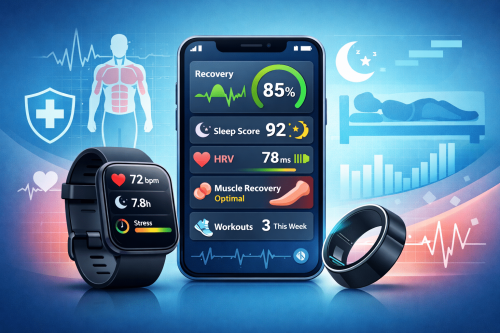
Traditional fitness trackers focused on basic activity metrics. However, modern wearable devices analyze sleep quality, stress levels, muscle recovery, and heart rate variability. As a result, users receive deeper insights into how their bodies respond to daily habits.
This shift matters now because modern work patterns create constant fatigue. Remote work, long screen time, and ongoing stress affect both physical and mental health. Therefore, many consumers now seek tools that help manage energy over time rather than track activity alone.
Companies such as WHOOP, Oura, Apple, and Garmin now compete in a growing market built around performance health wearables. Their devices promise to help users optimize recovery, manage stress, and sustain productivity.
From Activity Tracking to Performance Optimization
Early fitness trackers focused on simple movement metrics. Devices counted steps and estimated calories burned. Although these numbers helped users measure activity, they offered limited guidance on improving health.
However, performance health wearables change that model.
Modern devices analyze several biological signals simultaneously. For example, sensors measure heart rate variability, skin temperature, blood oxygen levels, and sleep stages. Then software transforms these signals into recovery scores and readiness metrics.
Because of this analysis, users receive practical daily guidance instead of raw data.
For instance, a wearable may suggest lighter exercise after detecting poor sleep. On the other hand, strong recovery signals may trigger recommendations for intense training.
Consequently, wearable health devices now function more like personal performance coaches.
Major Companies Leading the Market
Several companies drive the expansion of performance health wearables.
WHOOP built its platform entirely around recovery tracking. The device lacks a traditional screen and focuses on deep physiological data. As a result, many professional athletes use the WHOOP strap to monitor strain and recovery levels.
Oura takes a different approach. The Oura Ring tracks health signals through a compact ring design. Because the device sits on the finger, it collects detailed sleep and temperature data while remaining comfortable to wear.
Apple continues expanding health features in the Apple Watch. Recent updates include sleep tracking, temperature sensing, and heart rate variability monitoring.
Meanwhile, Garmin focuses on endurance training. Its watches measure training load, recovery time, and overall energy levels.
Together, these companies define the modern performance health wearables market.
Why Performance Optimization Matters Now
Several lifestyle trends drive interest in performance health wearables.
First, many professionals face chronic fatigue. Long work hours and digital overload raise stress levels. Therefore, consumers want tools that help maintain energy throughout the day.
Second, sports science now influences everyday health. Techniques once used by elite athletes now reach everyday users through wearable devices.
Third, people increasingly treat health as a productivity factor. Sleep quality, recovery, and stress management now influence work performance.
Heart rate variability tracking plays a key role in this trend. Higher HRV values often indicate stronger recovery and resilience. Lower HRV values may signal fatigue or stress.
According to the Cleveland Clinic, HRV analysis helps identify stress patterns and recovery levels in real time.
https://my.clevelandclinic.org/health/symptoms/21773-heart-rate-variability
Because of these insights, performance health wearables provide actionable guidance instead of simple data logs.
How Performance Health Wearables Work
Modern performance health wearables rely on several sensor technologies.
Optical heart rate sensors measure blood flow changes using LED lights. These sensors track heart rate and heart rate variability.
Accelerometers detect motion and movement patterns. Devices use this information to measure workouts and sleep behavior.
Temperature sensors track subtle changes in body temperature. These changes may signal illness, recovery status, or hormonal shifts.
Blood oxygen sensors estimate oxygen saturation during sleep or exercise.
Algorithms then combine all of this data. As a result, wearable software creates detailed health insights.
Sleep tracking provides a strong example. Devices analyze motion, breathing patterns, and heart rate signals to estimate sleep stages. These stages include light sleep, deep sleep, and REM sleep.
Because of this analysis, recovery scores reflect both sleep quality and physiological readiness.
Recovery Becomes the New Health Metric
Modern health technology now emphasizes recovery.
In the past, fitness culture focused on workout volume. In other words, people believed more exercise always produced better results.
However, modern sports science shows that recovery drives improvement.
Sleep, rest days, and stress management allow the body to repair muscle and restore energy. Therefore, performance health wearables now prioritize recovery metrics.
Devices track strain during workouts and compare it with overnight recovery signals. If recovery appears low, the device may recommend lighter exercise.
As a result, users can avoid overtraining and injury.
For everyday users, the same logic applies to work fatigue. For example, a wearable may detect rising stress levels during a long workday. In response, the platform might recommend breathing exercises or earlier sleep.
Consequently, wearable technology now guides both physical and mental recovery.
Stress Monitoring Gains Importance
Stress monitoring has become a major feature of performance health wearables.
Devices analyze heart rate variability to estimate stress levels. Lower HRV often indicates heightened stress or fatigue.
Some wearables also track breathing rate and skin temperature changes. These signals help estimate nervous system activity.
The autonomic nervous system controls both stress responses and recovery cycles. When stress remains elevated, recovery becomes more difficult.
Because of this relationship, wearable platforms now include guided breathing exercises and relaxation tools.
As a result, consumer health technology increasingly treats mental health as part of physical performance.
Sleep Optimization Becomes Essential
Sleep tracking remains one of the most valuable features of performance health wearables.
Quality sleep supports memory, recovery, immune function, and cognitive performance. Therefore, wearable platforms provide detailed sleep reports.
Typical sleep metrics include:
Sleep duration
Sleep efficiency
REM sleep time
Deep sleep time
Sleep consistency
Some devices also recommend ideal bedtimes based on recovery needs.
For example, a wearable might suggest earlier sleep after a stressful day or intense workout.
Over time, these insights help users build healthier sleep routines.
Limitations and Concerns
Despite rapid progress, performance health wearables still face several challenges.
First, sensor accuracy remains imperfect. Wrist based devices cannot match the precision of clinical medical equipment.
Second, algorithms rely on statistical models. Because human physiology varies widely, readiness scores may not always match real world fatigue.
In addition, privacy concerns continue to grow.
Wearable devices collect sensitive health data, including sleep habits and heart rate patterns. Therefore, companies must protect this information carefully.
Cost also limits accessibility.
Premium devices often require subscriptions that exceed $300 per year. In some cases, users must pay for access to advanced analytics.
Consequently, these costs may slow adoption among everyday consumers.
The Future of Performance Health Wearables
The next generation of performance health wearables will likely track even more health signals.
Researchers already test sensors that measure glucose levels, hydration, and metabolic health.
Artificial intelligence may also improve wearable insights. Future systems could detect fatigue, illness, or injury risk before symptoms appear.
Workplaces may adopt wearable health tools to support employee wellness programs.
Insurance companies could also use wearable data to assess health risks.
However, regulators will likely introduce stricter standards as wearable data influences medical decisions.
Practical Takeaways
Performance health wearables offer meaningful benefits.
Users gain insight into sleep quality, stress levels, and recovery patterns. Athletes can adjust training intensity based on recovery data. Meanwhile, professionals can monitor fatigue and productivity.
However, wearable data should guide behavior rather than control it.
The best results appear when users combine wearable insights with healthy routines, exercise, and balanced sleep.
Final Thoughts
Consumer health technology continues to evolve.
Instead of counting steps alone, modern devices analyze recovery, sleep, and stress patterns. As a result, performance health wearables now help users maintain long term energy and productivity.
This shift reflects a larger cultural change. Health no longer focuses only on fitness. Instead, people now view health as a system that supports sustainable performance in everyday life.