viaim RecDot Review: AI Earbuds That Capture Meetings
Meetings move quickly. Ideas appear in seconds, and important details disappear just as fast. That challenge explains why devices designed to capture conversations are becoming more popular in modern workplaces. A strong viaim RecDot review begins with this problem because professionals constantly struggle to record information while staying present in discussions.
Typing notes during meetings breaks concentration. Opening recording apps slows the moment down. Even when recordings exist, users often end up with long transcripts that nobody reviews.
The viaim RecDot approaches this challenge differently. Instead of adding another gadget to carry, the company integrates recording, transcription, translation, and AI summaries directly into wireless earbuds. The idea is simple. If people already wear earbuds for calls, meetings, and focus sessions, those earbuds should also capture the conversation.


Last update on 2026-10-25 / Affiliate links / Images from Amazon Product Advertising API
RecDot positions itself inside a new category of AI-powered wearable productivity devices. Several competitors offer similar ideas, but they usually appear in the form of small recorders or wearable badges. RecDot instead functions as a full-featured pair of earbuds that happens to include powerful recording and AI capabilities.
This approach reduces friction. Users do not need to remember to bring another device or activate a recording app. The capture process becomes part of something they already wear every day.
The physical design supports this goal. Each earbud weighs about 4.9 grams, which keeps the device comfortable during long listening sessions. The charging case weighs roughly 52 grams, making it easy to carry in a pocket or laptop bag. viaim includes four sizes of food-grade silicone ear tips so users can adjust the fit.
Fit matters more than many people realize. A proper ear seal improves audio quality, increases noise isolation, and allows microphones to capture speech more accurately.
Under the hood, RecDot uses an 11-millimeter titanium-coated dynamic driver. Larger drivers move more air than smaller ones, which improves bass depth and overall sound clarity. Titanium coatings strengthen the driver diaphragm and reduce distortion at higher volumes.
The earbuds support SBC, AAC, and LHDC Bluetooth codecs. LHDC allows higher bitrates than many standard wireless audio formats. In practice, this means clearer sound reproduction when listening to music or recorded conversations.
This balance matters because many productivity-focused devices sacrifice sound quality. RecDot attempts to avoid that compromise by offering audio performance that remains suitable for everyday listening.
Noise reduction also plays an important role. The earbuds include active noise cancellation rated up to 48 decibels. ANC works by generating inverse sound waves that cancel external noise. In busy environments such as offices, cafés, or airports, this feature helps users focus on calls and recordings.
The microphone system provides the foundation for the device’s AI capabilities. RecDot uses three microphones combined with a bone-conduction sensor.
Traditional microphones capture airborne sound waves. Bone conduction sensors detect vibrations traveling through the user’s jaw and skull. By combining these two sources, the system can isolate speech more accurately even in noisy environments.
This hybrid microphone setup becomes particularly useful in meetings where several people speak at once.
According to viaim, the system can capture voices from distances of up to seven meters. That range covers most conference tables and classroom discussions. While the earbuds cannot replace professional conference microphones, they perform well in typical work environments.
Hardware alone does not define the product’s value. The real advantage of RecDot appears once the captured audio moves into the AI software layer.
The companion mobile application processes recordings and transforms them into structured information. The platform automatically generates transcripts, summaries, translations, and speaker identification.
Rather than forcing users to read long transcripts, the AI highlights the key moments in a conversation. The software can also extract action items and meeting decisions, which saves time when preparing follow-up notes.
Language support expands the system’s usefulness. RecDot supports real-time transcription in dozens of languages and translation across more than 140 languages and dialects through the companion app.
This capability makes the device valuable for global teams, researchers, journalists, and professionals working across multiple regions.
Connectivity remains straightforward. RecDot supports Bluetooth 5.2, which improves connection stability and power efficiency compared with earlier Bluetooth standards. The earbuds also support dual-device pairing, allowing users to connect simultaneously to both a phone and a laptop.
Switching between devices happens automatically, which simplifies workflows for people who move frequently between calls, meetings, and mobile tasks.

Battery performance also supports everyday productivity. The earbuds provide approximately nine hours of playback on a single charge. The charging case extends total listening time to around thirty-six hours.
Fast charging helps reduce interruptions. A 20-minute charge restores about seventy percent of battery capacity, which can deliver several hours of additional listening time.
The interface design focuses heavily on speed. viaim introduced a feature called FlashRecord that allows users to begin recording instantly.
Users can pinch the earbud stem or press the red recording button on the charging case. The earbuds store audio directly in onboard flash memory. This approach removes the need to unlock a phone or open an application before recording begins.
Capturing conversations becomes almost effortless.
Security also plays an important role for devices that record spoken discussions. viaim reports compliance with several information security standards, including ISO 27001, ISO 27701, SOC 2 Type II, and HIPAA frameworks.
The device also includes recording alerts that notify participants when recording begins. This feature helps users follow privacy guidelines and workplace policies.
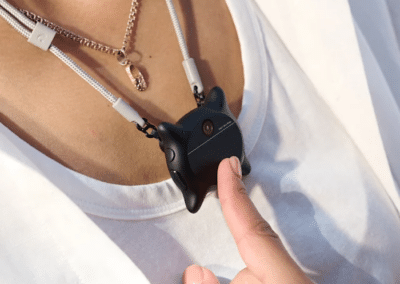
Compared with competing products, RecDot occupies an interesting middle ground. Devices such as PLAUD NotePin focus on lightweight wearable recorders but lack premium earbud functionality. Translation-focused devices like Timekettle W4 Pro emphasize multilingual communication but come at a significantly higher price.
RecDot instead combines several capabilities in one device. It functions as everyday wireless earbuds while also acting as an AI meeting assistant.
This combination works especially well for professionals who attend frequent meetings, interviews, or lectures. Students, consultants, journalists, and researchers can capture spoken information without interrupting conversations to write notes.
Teams that work across languages may also benefit from the transcription and translation features.
There are a few practical considerations. RecDot includes 600 free transcription minutes per month, which should cover typical meeting usage. Heavy users may require a subscription plan for additional AI processing.
Large conference rooms may still benefit from dedicated recording equipment. However, RecDot performs well in smaller meeting spaces where most everyday discussions occur.
This viaim RecDot review ultimately highlights a thoughtful approach to wearable productivity technology. By combining wireless earbuds with AI-driven transcription and summarization tools, RecDot turns a familiar accessory into a powerful assistant for modern work.
Instead of trying to remember every detail from a conversation, users can simply review the highlights later.