Withings Sleep Analyzer Review: Precision Sleep Tracking Without Wearables
Sleep tracking often fails for a simple reason. Most people stop wearing the device. The Withings Sleep Analyzer solves that problem by removing wearables entirely and embedding tracking into your bed.
This positions the Withings Sleep Analyzer in a unique category. It sits between consumer sleep gadgets and clinical monitoring tools. It targets users who want deeper health insight without changing daily habits. This review breaks down how it performs, where it excels, and where it demands compromise.


Last update on 2026-10-15 / Affiliate links / Images from Amazon Product Advertising API
A Different Approach to Sleep Tracking with Withings Sleep Analyzer
The Withings Sleep Analyzer uses a thin pneumatic sensor that sits under your mattress. It tracks sleep without skin contact or active input. That design choice defines the entire experience.
In practice, this means zero friction. You do not charge it, wear it. or press buttons. You simply go to sleep.
That matters because consistency drives sleep data accuracy. Most wearables lose value when users forget to wear them. The Withings Sleep Analyzer removes that failure point entirely.
It also enables passive long-term tracking. Over weeks and months, the device builds patterns that short-term trackers often miss.
Design, Build, and Installation Experience
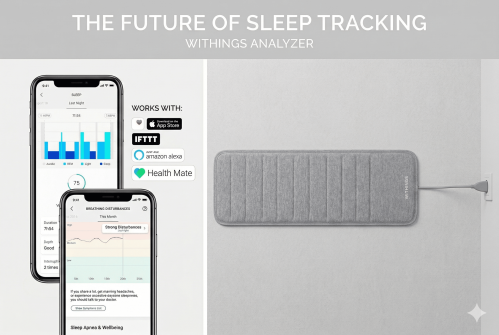
The hardware looks deceptively simple. It consists of a narrow mat with an air-filled sensor strip and a small control unit.
Installation takes under ten minutes. You slide the mat under your mattress, align it with your chest area, and plug it into power. The system connects via Wi-Fi, not Bluetooth.
That distinction matters. Wi-Fi enables continuous data syncing without proximity limits. You do not need your phone nearby overnight.
The build quality feels durable. The mat handles weight and pressure shifts without degradation. Over time, it blends into the bed setup and becomes invisible in daily use.
Here is where it stands out. Unlike wearables, there is no lifestyle adjustment. The product adapts to you, not the other way around.
Sensor Technology and What It Actually Measures
The Withings Sleep Analyzer uses a pneumatic sensor combined with advanced signal processing. It detects micro-movements, breathing patterns, and heart rate through the mattress.
This enables three core measurements:
• sleep cycles (light, deep, REM)
• heart rate trends
• breathing disturbances
The system also detects snoring and estimates its duration and intensity.
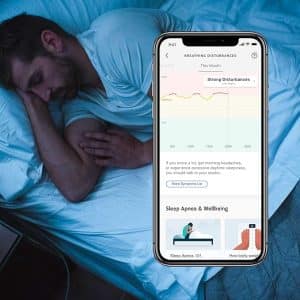
Where this gets interesting is sleep apnea detection. The Withings Sleep Analyzer includes a clinically validated algorithm that identifies breathing interruptions during sleep.
That matters because sleep apnea often goes undiagnosed. Traditional testing requires overnight lab visits. This device offers early insight from home.
It does not replace medical diagnosis. However, it provides actionable data that users can share with healthcare providers.
In practice, this elevates the product beyond basic sleep tracking. It becomes a preventative health tool.
Real-World Accuracy and Performance
Accuracy defines whether a sleep tracker holds value. The Withings Sleep Analyzer performs well in stable sleep conditions.
It tracks sleep duration and interruptions with strong consistency. Over time, its trend analysis becomes more useful than nightly snapshots.
Heart rate tracking works best during steady sleep phases. Rapid movement or restless sleep can introduce slight variation.
Breathing analysis stands out as a core strength. The system detects irregular patterns with notable precision for a non-wearable device.
That said, there are limitations.
If you share a bed, the system may struggle to isolate data cleanly. Movement from a partner can influence readings. Withings addresses this partially, but it does not fully eliminate cross-interference.
For solo sleepers, performance remains far more consistent.
In practice, the Withings Sleep Analyzer excels as a long-term trend tracker rather than a single-night diagnostic tool.
App Experience and Data Interpretation
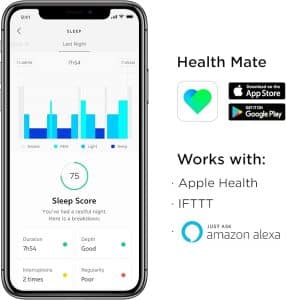
The Withings Health Mate app serves as the control center. It presents sleep data in a clean, structured format.
You see a sleep score each morning. This combines duration, depth, regularity, and interruptions into a single metric.
That simplifies complex data. Instead of parsing raw numbers, users get a clear daily snapshot.
You can also drill deeper into:
• sleep stages timeline
• heart rate curves
• snoring analysis
• breathing disturbance index
Here is where the product aligns with GadgetGram’s philosophy. It translates technical data into usable insight.
For example, the app highlights patterns such as inconsistent sleep schedules or elevated disturbances. It then suggests behavioral adjustments.
Over time, this creates a feedback loop. Users can test changes and see measurable impact.
Smart Home Integration and Ecosystem Value
The Withings Sleep Analyzer integrates with Apple Health, Google Fit, and select smart home platforms.
It also connects with IFTTT. This enables automation scenarios such as:
• turning off lights when you get into bed
• adjusting thermostat settings during sleep
• triggering morning routines based on wake time
That expands the product beyond health tracking. It becomes part of a connected home ecosystem.
For users already invested in smart home setups, this adds incremental value. For others, it remains optional.
Long-Term Use: Where Withings Sleep Analyzer Delivers
The real value of the Withings Sleep Analyzer emerges over time.
Short-term data offers insight. Long-term data drives decisions.
After several weeks, users can identify patterns such as:
• sleep debt accumulation
• irregular schedules
• environmental disruptions
• breathing inconsistencies
This supports real-world scenarios like:
- a consultant managing travel fatigue
- the founder optimizing performance during high-stress periods
- a student improving sleep consistency during exams
In each case, the device shifts from passive tracker to active decision tool.
That aligns with the broader trend in health tech. Data alone does not matter. Actionable insight does.
How Withings Sleep Analyzer Compares to Alternatives
The Withings Sleep Analyzer competes with both wearable trackers and bedside devices.
Compared to wearables like the Apple Watch or Fitbit, the Withings Sleep Analyzer:
• iremoves charging and wearing friction
• offers stronger breathing analysis
• lacks daytime activity tracking
Wearables suit users who want full-day health metrics. The Withings Sleep Analyzer focuses strictly on sleep.
Compared to bedside trackers like Google Nest Hub (sleep sensing):
• Withings offers more detailed breathing data
• Nest Hub provides contactless tracking without installation
• Withings delivers more clinical-style insights
That creates a clear split.
Choose Withings for depth and health monitoring.
Choose Nest Hub for convenience and smart display integration.
Compared to advanced systems like Eight Sleep:
• Withings costs significantly less
• Eight Sleep actively controls temperature
• Withings focuses on analysis, not intervention
That makes the Withings Sleep Analyzer a strong mid-tier option. It delivers advanced insights without premium system pricing.
Who Should Buy the Withings Sleep Analyzer
This product suits a specific type of user.
It works best for:
• professionals optimizing sleep for performance
• users concerned about sleep apnea or breathing issues
• people who dislike wearables
• long-term health trackers
It may not suit:
• couples seeking perfectly isolated tracking
• users who want fitness and sleep in one device
• buyers expecting instant, actionable results after one night
In practice, this is a commitment device. It rewards consistency over time.
Things to Consider Before Buying
The Withings Sleep Analyzer delivers strong insight, but context matters.
Bed sharing can impact accuracy.
This device works best for single sleepers.
It requires constant power.
Unlike wearables, it does not operate on battery.
It focuses only on sleep.
There is no activity or fitness tracking.
Data improves over time.
Short-term use limits its value.
These are not flaws. They define the product’s purpose.
Final Verdict: A Quiet Upgrade to Your Health Stack
The Withings Sleep Analyzer does something rare:
- removes friction while increasing depth.
- does not try to replace wearables.
- focuses on doing one job exceptionally well.
For users serious about sleep quality, it delivers insight that most devices miss.
That said, it demands patience. Its real value appears over weeks, not nights.
In the right context, the Withings Sleep Analyzer becomes more than a gadget. It becomes a silent, always-on health monitor that fits into your life without effort.
Where It Fits in the GadgetGram Ecosystem
At GadgetGram, we focus on tools that reduce noise and increase clarity. The Withings Sleep Analyzer aligns directly with that mission.
It filters complex physiological data into usable insight, removes unnecessary friction and supports better decisions without demanding attention.
That is what modern health tech should do.
Affiliate Disclosure
GadgetGram may earn a small commission if you purchase through links on this page. This helps support our independent testing and editorial work. We only recommend products we’ve researched or tested ourselves, and our opinions remain unbiased regardless of affiliate relationships.