

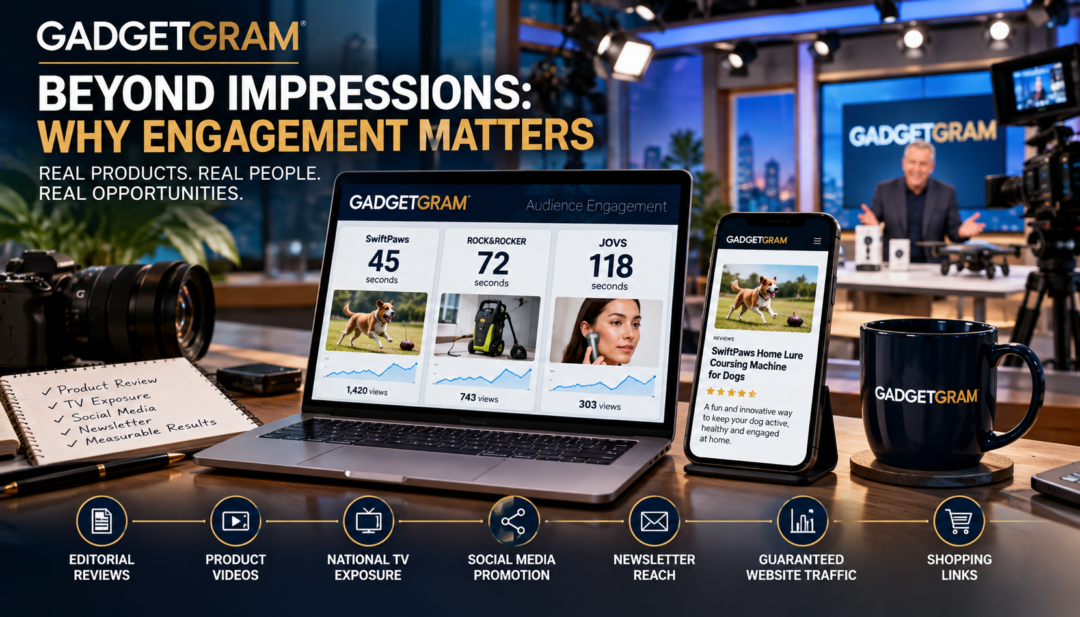
Beyond Impressions: How GadgetGram Helps Technology Brands Turn Product Exposure Into Lasting Engagement
Real product examples reveal why meaningful attention, trusted editorial coverage, and measurable promotion can deliver value beyond traditional advertising. Every technology company faces a familiar challenge: getting its product noticed. Whether launching an innovative gadget, introducing a new service, or competing in an established category, brands need more than visibility. They need opportunities to explain what makes their products different, reach interested consumers, and build confidence in the buying decision. Traditional advertising can generate thousands of impressions. But how many people actually pay attention? How many take the time to learn about the product? And what happens when the advertising campaign ends? At GadgetGram, we believe the answers matter more than the size of the audience alone. Our experience covering consumer technology has revealed an encouraging pattern: well-presented product stories can continue attracting readers, generating meaningful engagement, and creating opportunities for discovery long after their initial publication. Three real examples from GadgetGram’s editorial archives help illustrate why.
The Case for Engagement Over Impressions
An advertising impression tells a brand that its message had an opportunity to appear on someone’s screen. It doesn’t necessarily tell the brand whether the person read, understood, or cared about that message. Engagement provides another perspective. Google Analytics 4 measures engagement by tracking when a website is actively in use. While this measurement doesn’t prove purchase intent or guarantee a sale, it provides useful evidence that visitors are spending time with the content. And that distinction matters when introducing products that require explanation. A smart home device, specialized pet product, or emerging technology may need more than a few seconds to communicate its value. Consumers often want to understand how something works, why it matters, and whether it fits their needs. That’s where detailed product coverage can make a difference.
Three Products. Three Examples of Meaningful Engagement.
The following examples come from actual GadgetGram product coverage. They represent organic website activity rather than paid advertising campaigns.
 Case Study 1: SwiftPaws — The Long-Term Value of Product Discovery
Product: SwiftPaws Home Lure Coursing Machine The opportunity: Introduce consumers to a specialized pet exercise system that benefits from demonstration and explanation.
| Measured result | Performance |
|---|---|
| Article views | 1,420 |
| Active users | 1,144 |
| Average engagement time | Approximately 45 seconds |
SwiftPaws offers a useful example of how editorial content can have a life beyond launch day. Originally published in May 2020, GadgetGram’s coverage continued attracting readers years after publication. Search Console data also indicated ongoing discovery through Google.
For a product like SwiftPaws, this is particularly valuable. Consumers may not immediately know what a lure coursing machine is or why they might want one. Editorial content gives the product room to explain its purpose and demonstrate its relevance.
The marketing lesson: A product story doesn’t necessarily expire when the launch campaign ends. Searchable editorial coverage can create additional opportunities for discovery over time. Read the SwiftPaws coverage
 Case Study 2: ROCK&ROCKER — Sustained Consumer Attention
Product: ROCK&ROCKER Electric Pressure Washer The opportunity: Help shoppers understand the capabilities of a practical household product in a competitive category.
| Measured result | Performance |
|---|---|
| Article views | 743 |
| Active users | 547 |
| Average engagement time | Approximately 72 seconds |
The ROCK&ROCKER article demonstrated more than a minute of average active engagement. For a product where consumers may compare specifications, performance, and practical applications, this provides an opportunity to communicate meaningful product details. The article also demonstrated measurable search visibility. During the 16-month Search Console reporting window, it recorded 114 Google Search impressions, three clicks, a 2.63% click-through rate, and an average search position of 6.63.
These are modest numbers in absolute terms. However, they illustrate something important: product coverage can be discovered through search and attract readers who spend meaningful time with the information.
The marketing lesson: The quality of a product interaction deserves consideration alongside the number of people reached. Read the ROCK&ROCKER coverage
 Case Study 3: JOVS — Nearly Two Minutes of Active Engagement
Product: JOVS Photorejuvenation Skincare Device The opportunity: Explain a specialized consumer technology product that may be unfamiliar to potential buyers.
| Measured result | Performance |
|---|---|
| Article views | 303 |
| Active users | 226 |
| Average engagement time | Approximately 118 seconds |
The JOVS example is particularly interesting because of its engagement depth. Although the article attracted fewer visitors than the other examples, those visitors recorded nearly two minutes of average active engagement. For an innovative skincare device, the ability to explain the technology, describe its intended benefits, and provide context can be valuable.
This doesn’t establish that readers purchased the product. But it does demonstrate that an audience can spend substantial time engaging with specialized product information.
The marketing lesson: A smaller audience that spends time learning about a product may provide a different kind of marketing opportunity than a larger audience exposed to a brief advertisement. Read the JOVS coverage

What These Results Tell Us
Taken together, these examples illustrate three important advantages of product-focused editorial marketing.
- First, product content can have staying power. Unlike advertising that disappears when the budget runs out, published editorial coverage can remain accessible and continue attracting visitors through search, links, and ongoing discovery.
- Second, attention can be measured. Website analytics help distinguish a simple page view from time spent actively engaging with content. That provides brands with a more informative picture of how visitors interact with their product story.
- Third, product education creates opportunities. Consumers researching a purchase often need information, demonstrations, and reassurance. Thoughtful product coverage can help answer those questions in an environment dedicated to consumer technology.
None of these benefits guarantees a sale. Together, however, they provide a foundation for a marketing strategy built around more than impressions.

From Product Coverage to a Complete Marketing Campaign
Historically, GadgetGram has demonstrated that individual product articles can attract readers and generate engagement organically. Now imagine supporting that same kind of content with coordinated promotion across multiple channels. That’s the thinking behind the GadgetGram Showcase.
Rather than relying exclusively on a website’s existing traffic, the Showcase approach combines a permanent product information destination with multiple opportunities to introduce consumers to the product.
A Showcase campaign is designed to bring several marketing elements together:
- Product showcase page: A dedicated destination where consumers can learn about a gadget, service, or technology and find links to purchase or learn more.
- Independent editorial review: GadgetGram’s assessment provides a separate editorial perspective, with honest evaluation and clearly identified advertising relationships.
- Short-form product videos: Two or three informational videos help explain the product and create content suitable for digital distribution.
- National syndicated television exposure: A scheduled appearance introduces the product to audiences beyond the website, with an associated “As Seen On” marketing credential.
- Social media and newsletter promotion: Additional distribution creates opportunities to reach consumers across multiple channels.
- Guaranteed website traffic: The Showcase offer includes a commitment to deliver at least 300 page views within 30 days, supported by reporting.
Together, these components create a connected marketing experience. A consumer might first encounter a product in a television segment or social media post. That exposure can lead to a GadgetGram article, where the consumer can explore the product in greater detail and follow a direct shopping link. The goal is to connect initial awareness with product education and a convenient next step.
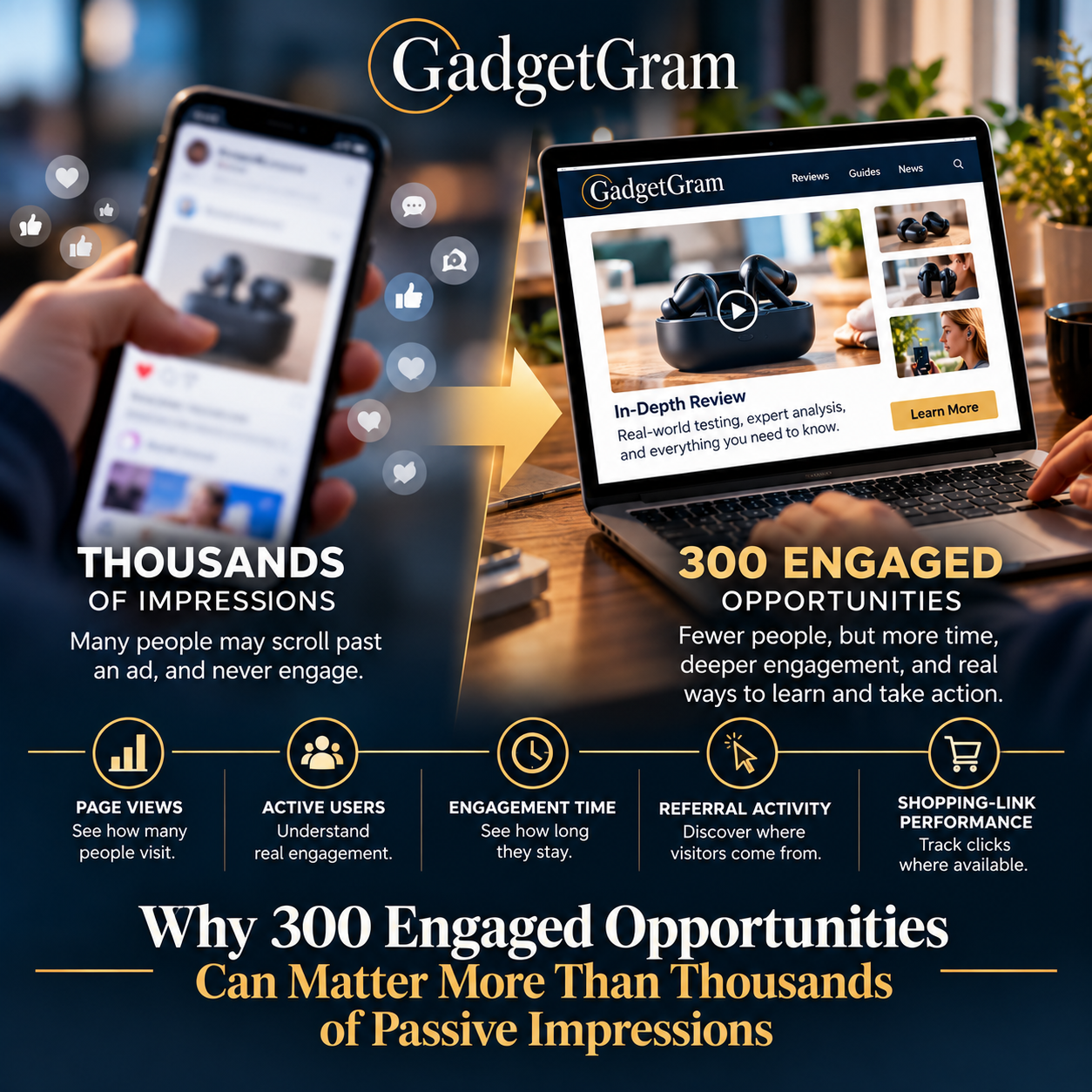
Why 300 Engaged Opportunities Can Matter More Than Thousands of Passive Impressions
Consider two different marketing experiences.
- In the first, an advertisement appears in a social media feed. Thousands of people may scroll past it, creating a substantial impression count. Some will notice it; others may barely register its existence.
- In the second, a consumer clicks through to a dedicated product page, spends time reading about the technology, watches an informational video, and has an opportunity to visit the manufacturer’s website.
The second experience may involve fewer people, but it offers more opportunities to communicate a product’s value. That is the distinction GadgetGram wants brands to consider.
The Showcase’s 300-page-view commitment is a measurable delivery target, not a promise that all 300 views will become engaged readers or customers.
What makes the approach interesting is the ability to examine what happens after those visits occur. Brands can evaluate page views, active users, engagement time, referral activity, and tracked shopping-link performance where available. Instead of relying entirely on projected exposure, they can begin building a clearer picture of actual audience behavior.
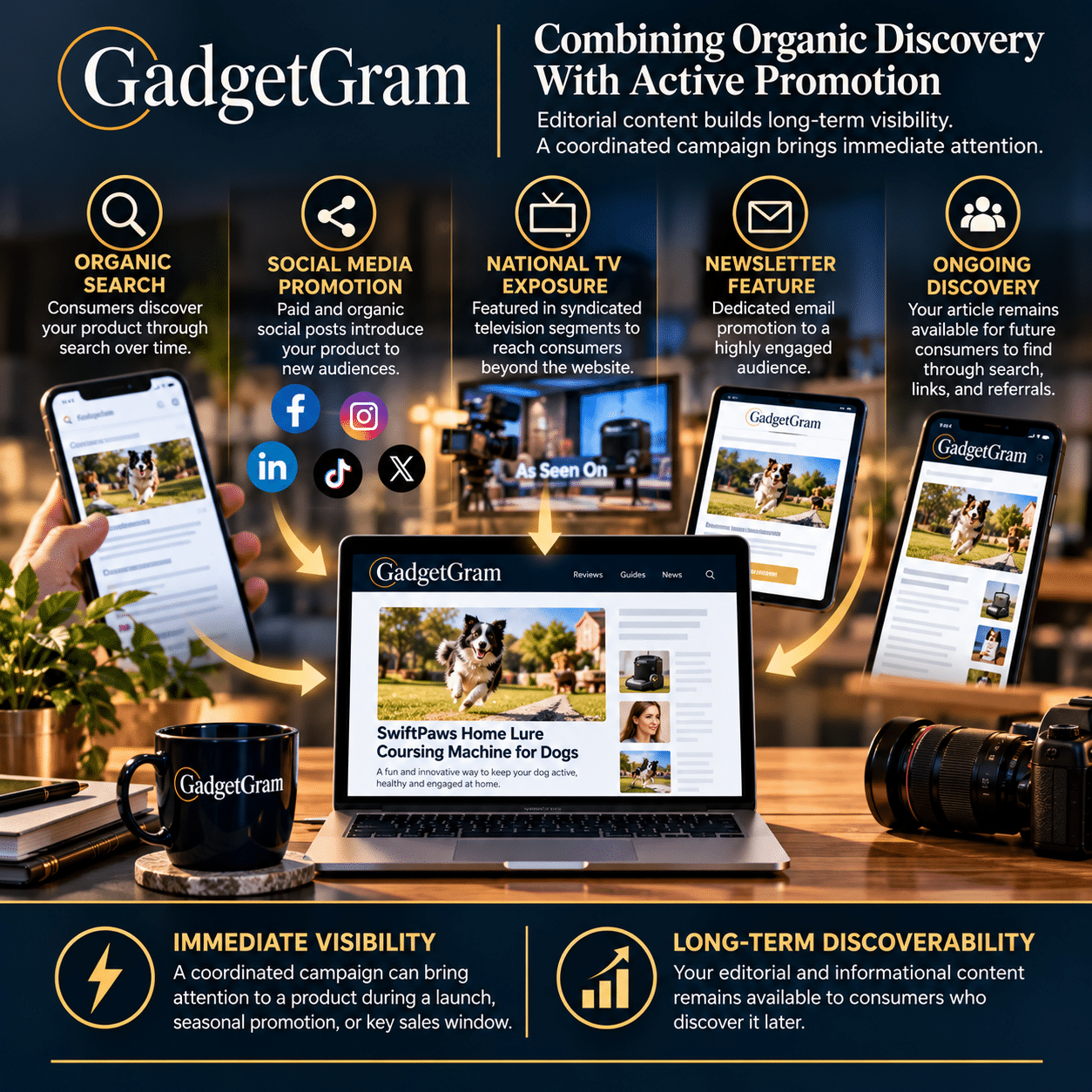
Combining Organic Discovery With Active Promotion
The historical SwiftPaws, ROCK&ROCKER, and JOVS examples were generated organically. That makes them useful illustrations of the value of ongoing editorial discovery. A coordinated campaign adds another dimension: the opportunity to actively introduce the content to more consumers. Paid social advertising, for example, can direct interested audiences to a dedicated product page. Television appearances, newsletters, and social posts can create additional discovery points. Meanwhile, the published article remains available after the initial promotional period. This creates two complementary opportunities:
- Immediate visibility: A coordinated campaign can bring attention to a product during a launch, seasonal promotion, or important sales window.
- Long-term discoverability: The product’s editorial and informational content can remain available to consumers who discover it later.
The combination offers a more complete approach than a single advertising placement.
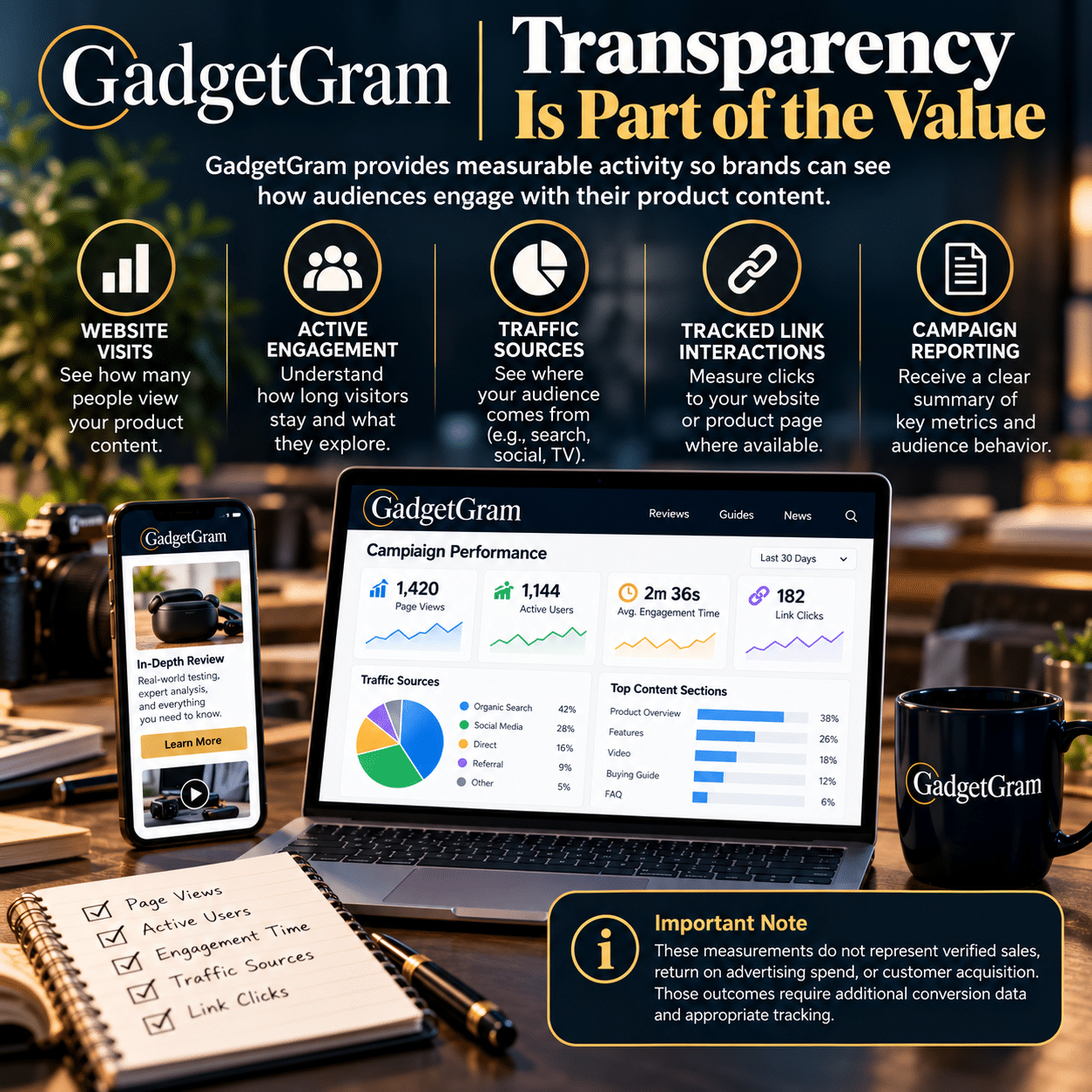
Transparency Is Part of the Value
Technology brands deserve to understand what their marketing dollars accomplish. GadgetGram’s approach emphasizes measurable activity rather than relying exclusively on large audience estimates. Depending on the campaign and tracking configuration, reporting can include website visits, active engagement, traffic sources, and interactions with tracked links. This information helps brands understand how audiences respond to their product content and provides a starting point for improving future campaigns. It’s important to distinguish those measurements from verified sales, return on advertising spend, or customer acquisition. Those outcomes require additional conversion data and appropriate tracking. The objective is straightforward: give advertisers useful evidence about what happened, what audiences engaged with, and where the next opportunities may exist.
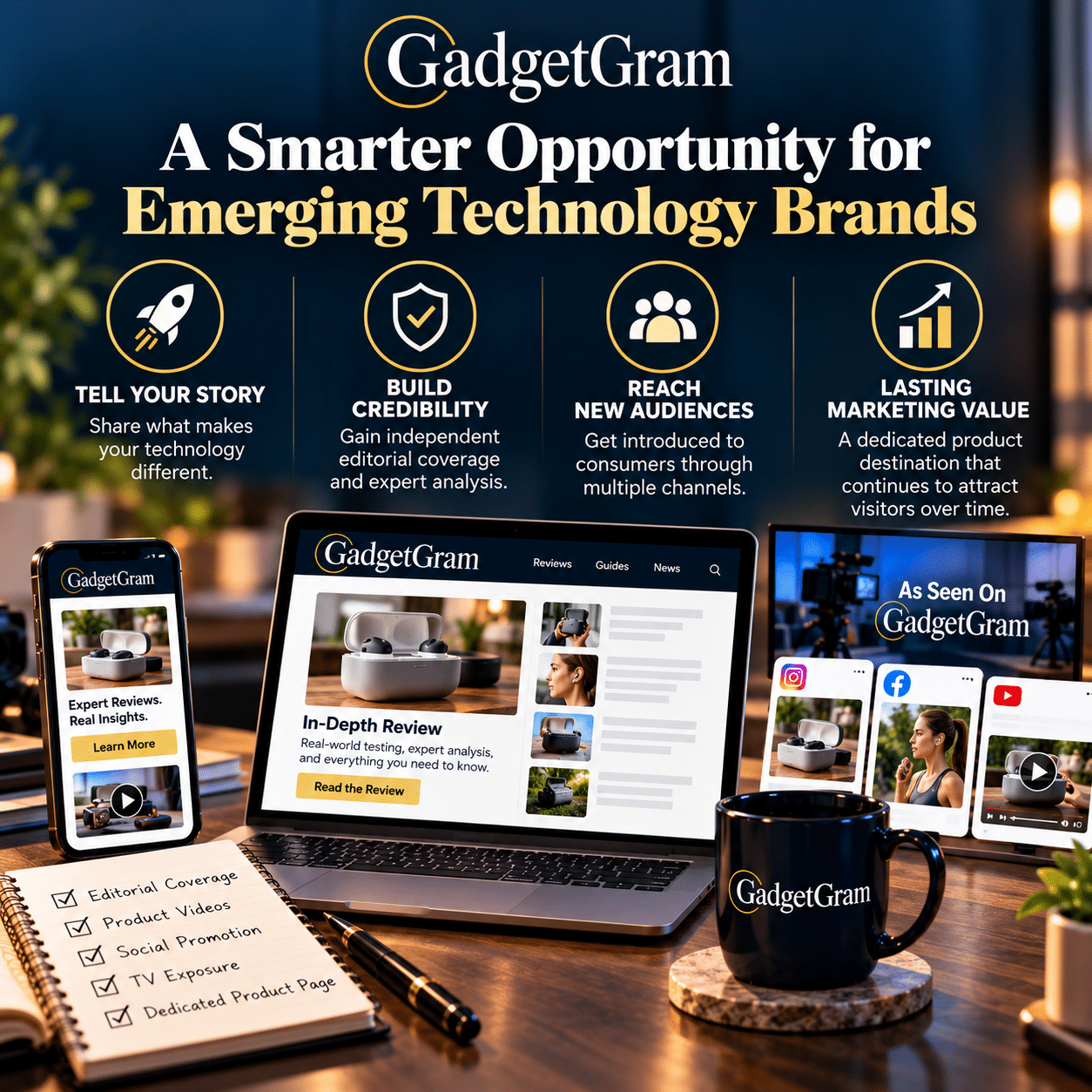
A Smarter Opportunity for Emerging Technology Brands
For established manufacturers, GadgetGram can provide another channel for product education, promotional content, and consumer discovery. For emerging brands, the opportunity may be even more relevant. A young company may not have a substantial advertising budget or a widely recognized name. But it still needs to tell its story, demonstrate its technology, and establish credibility. A coordinated product campaign can help create those marketing assets while introducing the product to potential customers through multiple channels. Instead of purchasing only temporary exposure, the brand gains a dedicated product destination and supporting content that can continue serving its marketing efforts. That makes GadgetGram Showcase worth considering for product launches, growing technology companies, and established brands introducing something new.

Your Product Deserves More Than an Impression
The real question isn’t simply how many people see your advertisement. It’s how many have an opportunity to understand what makes your product worth considering. GadgetGram’s historical product coverage demonstrates that consumers can spend meaningful time engaging with technology content, even when the audience is relatively modest. The GadgetGram Showcase builds on that foundation by combining product education, independent editorial perspective, video, national television exposure, digital promotion, and measurable traffic delivery. Because effective product marketing isn’t just about being seen. It’s about being discovered, understood, and remembered.

Ready to Put Your Product in the Spotlight?
Discover how GadgetGram can help introduce your gadget, technology, or service to consumers through a coordinated product marketing campaign. Get your showcase started today or schedule an appointment: GadgetGram.com
About the data: The three historical examples use GadgetGram Google Analytics 4 data covering January 1, 2023, through October 1, 2026. Search Console observations use a separate, recent 16-month reporting period where available. Figures were reviewed October 1, 2026. These examples are not results from the new GadgetGram Showcase program, nor do they establish verified purchases, sales conversions, or return on investment. Actual campaign performance will vary.